
Why Your Garage Door Gets Stuck While Closing
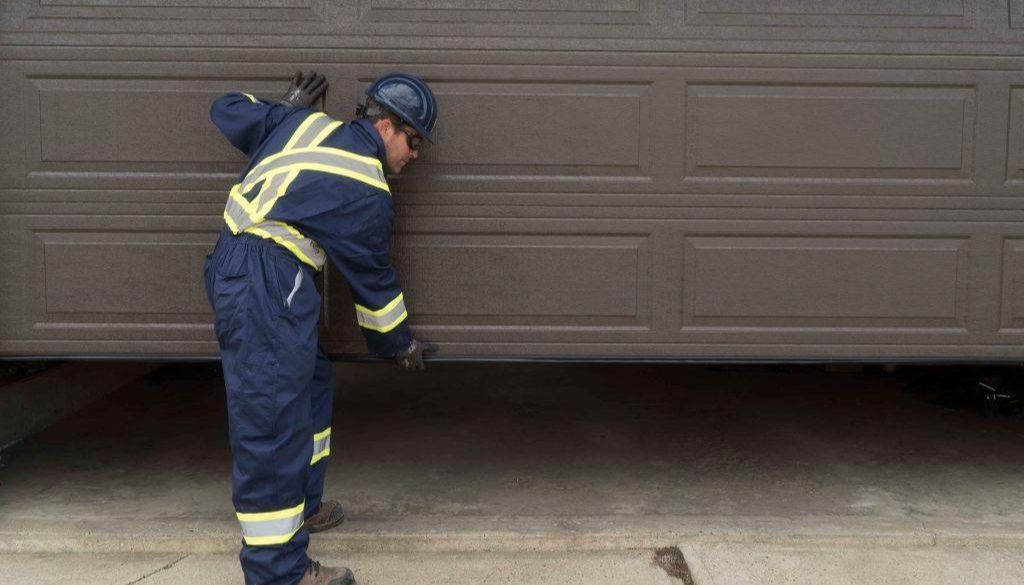
There are few things more frustrating than a garage door that gets most of the way down — then stops dead, or worse, lurches and jams between the second and third panel. It’s a specific, recognisable fault, and it happens more often than you’d think on Queensland’s Gold Coast, where heat, humidity, and salt air accelerate wear on every moving part of a sectional door system.
The good news is that a garage door stuck between panels is usually caused by one of a handful of mechanical issues — most of which can be identified with a simple visual inspection. A few can be fixed yourself in under an hour. Others require professional repair to do safely, particularly anything involving springs or cables under tension. Roller shutters can also get stuck mid-travel when slats or guides are worn — learn more about roller shutter garage door repairs and what causes them to jam unexpectedly.
This guide walks you through every likely cause, what to look for, and when to stop DIYing and call the team at A1 Garage Doors Gold Coast.
How Sectional Garage Doors Work
A sectional garage door is made up of several horizontal panels — typically four to six — connected by hinges. As the door opens and closes, those panels travel along a curved steel track: descending vertically along the wall, then curving overhead into the horizontal ceiling position. Rollers attached to each panel ride inside the track, and a system of springs and cables provides the counterbalance that makes a heavy door feel light to operate. Excessive friction in the tracks can also stall the motor entirely, which is why a humming opener that won’t move the door often turns out to be a door-side problem rather than a failed motor.
When all components are in good condition and properly adjusted, this transition is smooth and quiet. But because there are so many moving parts, wear in just one area can cause the entire system to bind — and the junction between the second and third panel, roughly halfway through travel, is a common friction point.
If your garage door gets stuck between panels, it may also indicate issues with the door’s balance or spring tension, which can cause the garage door bounces when closing and create further operational problems if left unaddressed.
Common Causes of a Garage Door Getting Stuck Between Panels
Understanding what’s going wrong requires looking at the whole system. Here are the most frequent causes of a door jamming during the closing cycle.
Misaligned or Bent Tracks
The steel tracks that guide your garage door panels must be perfectly parallel and correctly spaced from the door. If a track has been knocked by a vehicle, shifted slightly during installation, or warped over time, the rollers can’t travel through the curve smoothly — and the door stalls.
Signs of track trouble include uneven movement, a jerking or shuddering motion during travel, and visible gaps between the roller and the track rail. Run a spirit level along the vertical section of your track: it should be perfectly plumb. Any lean or bow in the track is a problem.
Worn or Damaged Rollers
Rollers are the small wheel-and-stem assemblies that allow each panel to glide along the track. Standard nylon or steel rollers have a lifespan of around 10,000 to 15,000 cycles — which sounds like a lot, but equates to five to ten years of daily use. When rollers develop flat spots, crack, or seize, they create friction at the same point in the track every time.
The second and third panel junction sits right at the curve where vertical track meets horizontal overhead track — the zone of highest mechanical stress. Worn rollers are particularly likely to jam at this transition point. Inspect them by hand: they should spin freely with no wobble or roughness.
Lack of Lubrication
Garage door hardware operates under continuous load. Without regular lubrication, hinges, roller bearings, springs, and the track itself develop friction that compounds with every cycle. In Gold Coast’s humid coastal climate, metal components can also develop surface corrosion that makes the problem worse.
Use a silicone-based lubricant or purpose-made garage door spray — not WD-40, which evaporates quickly and attracts grime, and not grease, which collects dust and eventually thickens into a paste that causes binding. Apply lubricant to all hinges, roller stems, and the torsion spring every six months as a minimum.
Obstructions in the Tracks
Dirt, debris, small stones, and built-up grime inside the track channel can physically block the rollers at any point. Insects nesting in the track — particularly in warmer Queensland months — can also cause unexpected jamming. A visual inspection with a torch along the full length of both tracks should reveal any obstructions.
Clean tracks with a damp cloth before lubricating. Do not use high-pressure water, which can force debris further into the channel or disturb track alignment.
Broken or Worn Components
Springs, cables, and hinges that are past their service life can cause the door to sag, bind, or jam mid-travel. A torsion spring that has partially lost tension won’t fully counterbalance the door, making the opener work harder and putting stress on the rollers and track. A frayed lift cable creates uneven tension between the two sides of the door, causing it to travel at an angle and bind in the track.
Quick reference: common garage door problems vs. likely causes
| Problem | Likely Cause | DIY Fix? |
|---|---|---|
| Door jerks between panel 2 and 3 | Worn or flat-spotted rollers | Yes — replace rollers |
| Door stops with a thud mid-close | Obstruction in track | Yes — clean tracks |
| Grinding noise during movement | Lack of lubrication | Yes — apply silicone spray |
| Door hangs unevenly | Frayed or broken cable | No — call a professional |
| Door reverses before closing fully | Misaligned safety sensors | Yes — realign sensors |
| Heavy door, won’t stay up | Broken torsion spring | No — call a professional |
| Panels visibly bending | Track misalignment or impact | No — call a professional |
How to Troubleshoot a Garage Door Stuck While Closing
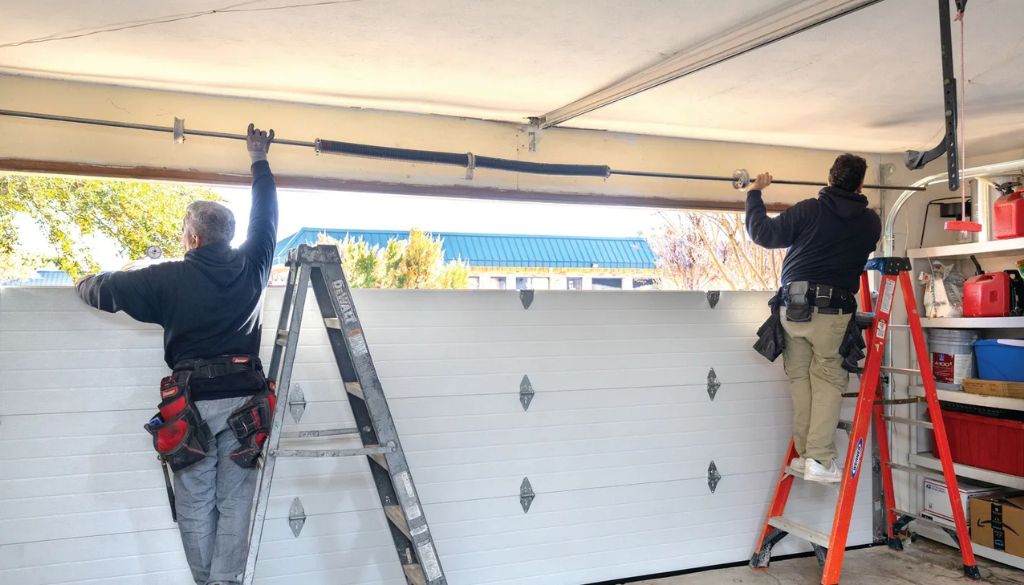
Before calling a technician, work through these steps in order. Always disconnect the opener by pulling the emergency release cord before manual inspection, and never attempt repairs while the door is partially open and under load.
Step 1: Inspect the Tracks
With the door fully closed, examine both tracks from top to bottom. Look for bends, dents, or areas where the track has pulled away from the wall bracket. Use a spirit level to check the vertical sections are plumb. Minor misalignment can sometimes be corrected by loosening the mounting bolts, nudging the track into position, and re-tightening. Visible bends or significant gaps require professional track replacement.
Step 2: Check the Rollers and Hinges
With the door in the closed position, spin each roller by hand. It should rotate smoothly without grinding, wobbling, or resistance. Check the hinge plates for cracks, bent flanges, or loose bolts. Tighten any loose hardware with a socket wrench. Replace any rollers that fail the spin test — replacement nylon rollers are inexpensive and widely available.
Step 3: Clean and Lubricate Moving Parts
Wipe the inside of both tracks clean with a damp rag, then dry thoroughly. Apply silicone spray to the roller stems (not the track itself), all hinge pivot points, and the torsion spring along its full length. Reconnect the opener and run the door through two or three full cycles. A well-lubricated door runs quietly through its full travel.
Step 4: Check for Sensor Issues
Modern garage door openers include photoelectric safety sensors mounted at the base of the door frame. If these sensors are misaligned, dirty, or partially blocked, the opener will halt or reverse the door mid-cycle — which can look exactly like a mechanical jam. Check that both sensors face each other squarely: most units have an indicator light that glows solid green when correctly aligned. Clean the sensor lenses with a soft cloth and carefully adjust the mounting bracket until both lights are solid.
For a broader overview of common faults, see our complete garage door troubleshooting guide, which covers everything from opener faults to panel damage.
Warning Signs You Should Call a Professional
Some garage door problems should never be attempted as DIY repairs. If you notice any of the following, stop operating the door and contact a qualified technician.
If your garage door has suffered significant damage between the panels, professional garage door panel replacement can restore its appearance, improve safety, and help your door operate smoothly again.
Broken or Failing Torsion Springs
Torsion springs sit above the door on a horizontal shaft and store enormous mechanical energy. A breaking spring often announces itself with a loud bang, after which the door becomes extremely heavy or drops suddenly. Do not attempt to operate the door or handle the spring — the stored tension is sufficient to cause serious injury. This is always a professional repair.
Frayed or Broken Lift Cables
Lift cables run from a drum at the top of the door down to the bottom bracket on each side. A fraying or broken cable causes the door to hang at an angle, which puts severe strain on the opposite side and can cause the door to come off track entirely. Call A1 Garage Doors Gold Coast immediately on (07) 5515 0277 if you notice uneven travel or a visible cable that looks twisted, frayed, or slack.
Frayed cables and broken springs often constitute a garage door emergency — read our guide to emergency garage door repair on the Gold Coast to understand your options and response times.
Door Off Track
If the door is visibly crooked, if rollers have jumped out of the track, or if the door is grinding against the frame rather than travelling smoothly, stop operating it immediately. Continuing to run an off-track door can damage the panels, the opener, and the surrounding frame — and puts anyone nearby at risk.
Preventing Garage Door Panel Problems
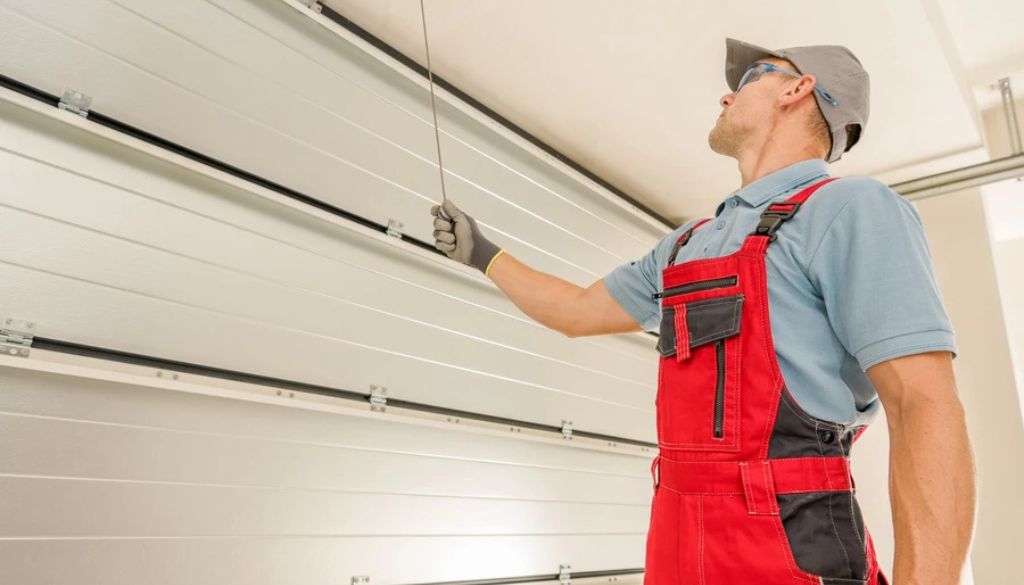
Like most mechanical systems, garage doors reward regular maintenance with years of reliable service. Most Gold Coast homeowners who call us for emergency repairs could have avoided the fault — or at least caught it early — with a simple biannual check. When rollers and hinges wear unevenly, the door often jams at a specific point in its travel — learn more about what causes a garage door to get stuck between panels and how to pinpoint the fault before it gets worse.
Routine Maintenance Checklist
* Lubricate rollers, hinges, springs, and the opener chain or belt every six months
* Inspect tracks visually for bends, gaps, or wall bracket movement
* Test roller spin and replace any that are stiff, cracked, or flat-spotted
* Clean sensor lenses monthly and check alignment after any vehicle enters the garage
* Tighten all visible hardware bolts — vibration loosens them over time
* Listen for changes in sound profile: grinding, squeaking, or thumping all signal developing faults
If your opener is straining to move the door, it may be compensating for a mechanical fault. Our garage door opener comparison guide can help you evaluate whether the issue is with the drive system or the door itself.
Schedule a Professional Annual Inspection
Even if your door seems to be running well, an annual inspection by a qualified garage door technician will catch worn springs, stretch in the lift cables, and subtle track deviations before they become failures. A professional service typically includes hardware tightening, full lubrication, spring tension check, balance test, and sensor calibration.
Thinking about upgrading your existing door? Our guide to composite garage doors covers the durability benefits of modern panel materials in Queensland’s coastal climate.
Frequently Asked Questions
Why does my garage door stop halfway when closing?
The most common causes are worn or obstructed rollers, misaligned tracks, dirty or misaligned safety sensors, or a lack of lubrication. In some cases, a partially failed torsion spring reduces the door’s counterbalance, causing the opener to stall.
Can I fix a stuck garage door myself?
Many common causes — dirty tracks, worn rollers, lack of lubrication, misaligned sensors — are safe to address yourself. Anything involving springs or cables under tension should always be handled by a qualified technician.
How often should I lubricate my garage door?
Every six months as a minimum in Gold Coast’s humid coastal environment. Use a silicone-based spray on all hinges, roller stems, and springs. Avoid WD-40 and grease.
How much does it cost to repair a stuck garage door?
Cost depends on the cause. Roller replacement is relatively inexpensive; track realignment is a mid-range job; spring or cable replacement is more involved. Contact A1 Garage Doors Gold Coast on (07) 5515 0277 for an obligation-free quote.
See what Gold Coast homeowners say about our repairs on our customer reviews page — rated 4.9/5 across hundreds of verified jobs. For homeowners needing reliable solutions for damaged or stuck garage doors, our team of Local garage door specialists Palm Beach can provide expert repairs and professional advice to restore smooth and safe operation.
Need help with a stuck garage door on the Gold Coast? Call A1 Garage Doors Gold Coast: (07) 5515 0277
Serving Bundall, Surfers Paradise, and all Gold Coast suburbs. 1 Waterford Ct, Bundall QLD 4217 | goldcoastgaragedoorrepair.com.au
