
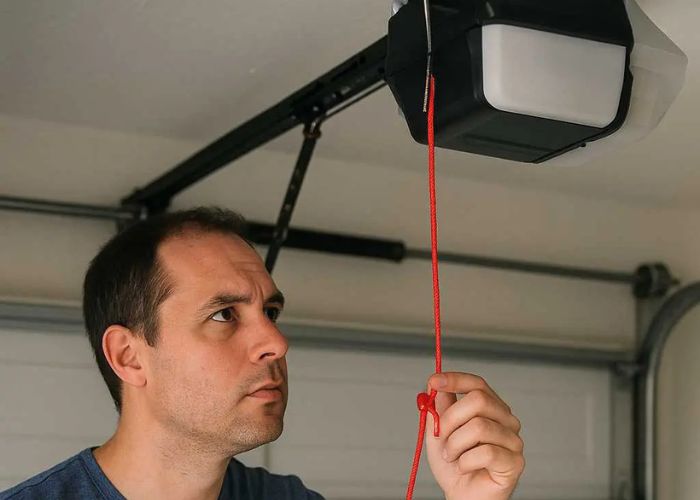
Power outages on the Gold Coast don’t announce themselves. Whether it’s a summer storm rolling in off the coast or a tripped circuit at the worst possible moment, finding yourself locked out of a non-functioning automatic garage door is a situation that catches most homeowners off guard. The emergency release on your garage door opener exists for exactly these moments — a simple, built-in failsafe that allows you to take manual control of the door when your automated system can’t do its job. Understanding how it works before you need it is the difference between a manageable inconvenience and a genuinely stressful situation.
The red emergency release cord is one of the most important features on any automated garage door system, yet most homeowners have never touched it. It disengages the door from the motorised trolley, allowing the door to be operated entirely by hand. This is not a feature you want to discover for the first time in the dark, in a hurry, with no idea what to expect. Knowing where it is, when to use it, and how to safely reconnect the system afterward gives every member of the household a critical piece of safety knowledge.
At A1 Garage Doors Gold Coast, we regularly attend callouts where the emergency release has been misused — often causing more damage than the original fault. This guide walks through the correct procedure from start to finish, covering the safety checks you need to make first, the step-by-step process for manual operation, and how to get your automatic system back online once power is restored. If you encounter resistance, damage, or anything that doesn’t feel right, call us on (07) 5515 0277 and we’ll have a technician to you fast.
Why Your Garage Door Has an Emergency Release
Every garage door opener sold in Australia is required to include a manual release mechanism. In the event of a power failure, motor fault, or remote control failure, the release allows the door to be operated entirely by hand — a legal safety requirement as much as a practical one.
The release works by disconnecting the carriage (also called the trolley) from the drive mechanism. When the trolley is disengaged, the door is free to slide along its tracks independently of the motor. This is the same principle whether you have a B&D, Merlin, Chamberlain, or any other brand of opener — the design is universal. Most sudden failures are the result of wear that built up over years, so a little garage door lifespan and maintenance planning is the simplest way to avoid an after-hours call-out.
It’s worth noting that the emergency release does not bypass issues with your torsion springs, tracks, or rollers. If your door was struggling to operate before the power went out, those underlying problems will still be present when you try to lift it manually. For a full overview of faults that can affect how your door moves, the garage door troubleshooting guide on our site covers the most common causes in detail.
Once the opener is disengaged, avoid forcing the door by hand, and instead follow the correct steps to repair and re-track a garage door safely.
When You Should Use the Emergency Release
Use the emergency release in the following situations:
- Your home has lost power and you need vehicle access
- The opener motor has failed or is making no response
- The remote and wall button are both unresponsive
- The door has stalled mid-cycle and the motor will not clear the obstruction
Do not use the emergency release if:
- You suspect a broken torsion or extension spring (the door may drop suddenly under its own weight)
- The door is partially open and not fully supported
- You can hear the motor running but the door isn’t moving — this usually indicates a drive belt or trolley fault requiring professional diagnosis
If your opener is a newer smart model, check whether your system has a battery backup before pulling the cord — many modern openers including certain B&D and Merlin units can operate through short outages automatically. For a comparison of smart opener features, our guide to smart garage door openers in Australia is worth reviewing before your next upgrade.
Locating the Emergency Release Cord
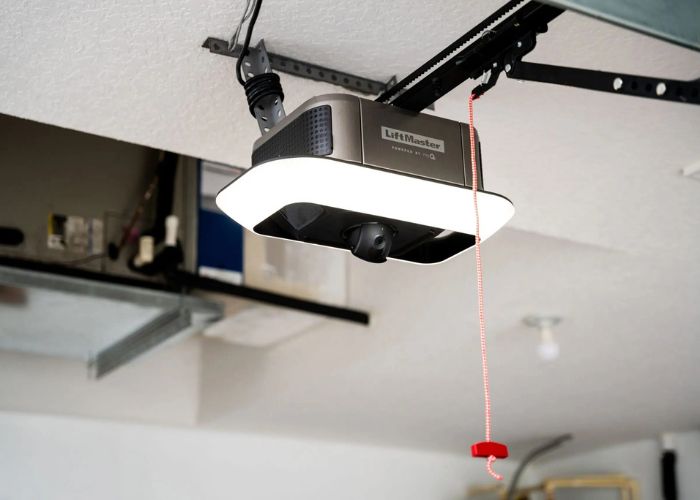
On most sectional and roller door openers installed in Australian homes, the emergency release cord hangs directly from the trolley carriage on the overhead rail. It is almost always:
- Red in colour — a universal safety convention
- Attached to a T-shaped or teardrop handle
- Hanging roughly in the centre of the garage ceiling, level with the rail
On newer models, the cord may have a safety cover or lock designed to prevent children from accidentally triggering the release. If you see a cord with a small plastic housing around the connection point, that is normal — it will still pull free when you apply firm, downward pressure.
On roller doors (common on older Gold Coast homes), the release mechanism may be positioned differently — sometimes accessible via a small external panel rather than a ceiling cord. If you are unsure where your release is located, check the manufacturer’s manual or call A1 Garage Doors Gold Coast for a quick walk-through.
Safety Precautions Before Using the Manual Release
This is the step most people skip, and it is the most important one. Before you pull the cord:
1. Ensure the door is fully closed. This is critical. A door that is partially open is under significant tension from the spring system. Releasing the trolley with the door in any position other than fully closed can cause it to drop suddenly — and a sectional garage door weighs between 60 and 130 kg. Never pull the cord with the door open or mid-travel.
2. Check the spring condition visually. If you can see a visible gap in the torsion spring above the door, or if one side of the door appears lower than the other, do not attempt manual operation. Call a technician. Broken spring repairs carry serious injury risk and are not a DIY task — for context on how opener and spring components interact, our post on rollup door problems and how to fix them covers related mechanical faults in detail.
3. Wear appropriate gear. Closed-toe shoes and gloves are recommended. If your garage is dark, have a torch or phone light ready before you start.
4. Work with a partner if possible. A second person to hold or guide the door as it moves makes the entire process significantly safer, particularly on heavier sectional doors.
Step-by-Step Guide to Using the Emergency Release
Step 1 — Pull the Red Handle Straight Down
Stand beneath the trolley and grip the red handle firmly. Pull it straight downward in one smooth motion. You should hear or feel a distinct click as the trolley carriage disengages from the drive. Do not yank the cord sideways or at an angle — this can damage the release mechanism on some models.
Step 2 — Lift the Door from the Bottom
Position yourself at the centre of the door’s bottom panel. Using your legs rather than your back, push upward from the base. Sectional doors should begin to move along the track with steady, even pressure. Do not jerk or force the movement — if the door feels unusually heavy or is moving unevenly, stop immediately and assess for obstructions or spring damage.
Step 3 — Guide the Door Along the Tracks
As the door travels upward, use hand-over-hand guidance to keep it moving smoothly along the horizontal track. The door should reach a natural resting position when fully open — on most sectional doors, this means the panels lie horizontally overhead and the door holds its own weight. If it doesn’t hold position and begins to slide back down, do not stand underneath it.
Step 4 — Check for Resistance or Unusual Movement
Before using the door opening for vehicle or pedestrian access, run through a quick visual check:
- Are the tracks straight with no visible bends or obstructions?
- Do all rollers appear to be seated properly in the track?
- Is the door sitting level when open?
If anything looks wrong, leave the door in the closed position and arrange a service call with A1 Garage Doors Gold Coast.
Step 5 — Secure the Door When Leaving
If you need to leave the property with the door manually disengaged, be aware that the door offers reduced security — it cannot be locked via the automatic system. Use any manual locking bars or bolts your door is fitted with before leaving. Smart technology and integrated home security are covered in our post on the latest innovations in garage door technology, which includes backup access solutions worth considering for future-proofing your setup.
Common Mistakes to Avoid
| Mistake | Why It’s Dangerous |
|---|---|
| Pulling the cord with door partially open | Door can drop suddenly under its own weight |
| Using the cord to try and lift the door | The cord is for disengagement only — it cannot support load |
| Ignoring resistance or grinding sounds | May indicate broken spring, bent track, or roller failure |
| Re-engaging without testing the door first | Damage may worsen if opener is re-engaged over a fault |
| Leaving the door manually open overnight | Door is unsecured and exposed to weather |
Reconnecting the Door to the Automated System
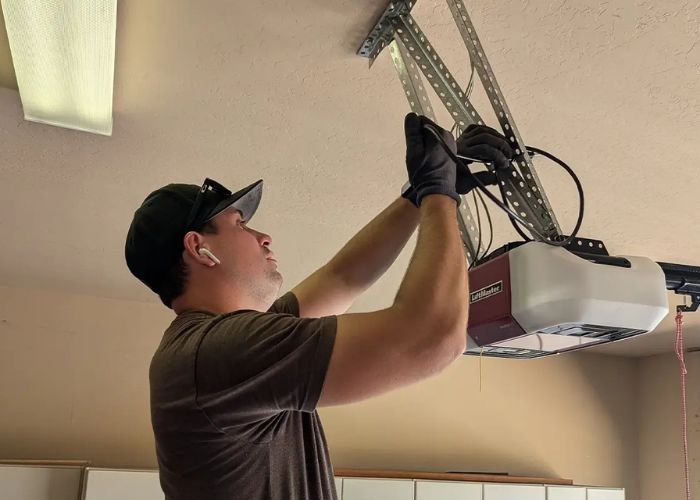
Once power has been restored or the fault has been resolved, reconnecting the door to the opener is straightforward.
1. Close the door fully by hand before attempting to re-engage.
2. Pull the emergency release cord toward the motor unit (rather than straight down). On most openers, this slides the trolley carriage back into the drive mechanism. You should feel it click into place.
3. Test the opener with the remote or wall button. The door should begin to move smoothly. Listen for any unusual grinding, clicking, or resistance.
4. Run a full open-and-close cycle to confirm the system is operating correctly before leaving the door unattended.
5. If the opener does not engage after following these steps, some models require a manual reset via a button on the motor unit. Consult your manufacturer’s guide or call us on (07) 5515 0277 — our team services all major opener brands across the Gold Coast.
Household Preparedness Tips
A single training moment with every member of your household can prevent a genuine emergency from becoming a safety incident. A few practices worth putting in place:
- Show everyone where the cord is. Walk every household member through the location and correct technique at least once.
- Inspect the cord monthly. Check for fraying, brittleness, or discolouration. If the handle or cord shows visible wear, arrange a replacement — it’s a low-cost part.
- Test manual operation once or twice a year. This confirms the release is working correctly and keeps the mechanism from seizing with disuse.
- Keep the tracks clear and lubricated. A well-maintained door moves freely under manual operation. Debris, rust, or dry rollers all add resistance. Our guide on garage door insulation and maintenance covers additional seasonal maintenance checks relevant to Gold Coast conditions.
- Consider a backup battery opener. For households that rely heavily on garage access, a battery backup unit eliminates most power-outage scenarios entirely.
FAQ
When should I use the emergency release?
Use it any time the automatic opener cannot operate and you need to move the door manually — most commonly during power outages, motor failures, or complete remote and wall button unresponsiveness. Do not use it if you suspect a broken spring.
Why must the door be fully closed before pulling the cord?
With the trolley disengaged, nothing prevents the door from moving freely. A door that is partially open is under spring tension — releasing the trolley in that position allows the door to drop rapidly under its own weight, which is a serious injury risk.
How do I safely lift the door manually?
Stand at the centre of the bottom panel with feet shoulder-width apart. Push upward using your legs, not your back. Guide the door steadily along the tracks without forcing or jerking. If it feels unusually heavy, stop and check for spring or track issues before proceeding.
How can I tell if the trolley has disengaged correctly?
You will hear a distinct click when the cord is pulled correctly, and the door will feel lighter when you attempt to lift it — no longer connected to the drive mechanism. If the door still feels locked or immovable, do not force it.
What should I check before reconnecting the opener?
Confirm the door is fully closed, the tracks are clear of obstructions, and no visible damage is present on springs, cables, or rollers. Re-engage by pulling the cord toward the motor, then run a full test cycle before relying on the system.
When to Call a Professional
If at any point the door feels wrong — heavy on one side, grinding against the track, or refusing to hold its position when open — stop and call a licensed technician. Garage door spring systems operate under extreme tension and are among the more injury-prone components in any home.
A1 Garage Doors Gold Coast has been serving Gold Coast homeowners since 2020, with a 4.9-star rating and fast response across Bundall, Surfers Paradise, Robina, Broadbeach, and surrounding suburbs. Whether it’s an emergency release fault, opener repair, or full system assessment, we’re here when you need us.
📞 (07) 5515 0277 | goldcoastgaragedoorrepair.com.au
