
You notice that your garage door is hanging unevenly. One lifting cable looks tight, but the other is sagging or sitting awkwardly near the drum. If your garage door cable is loose on one side, stop operating the door until the cause has been checked.
A slack cable can be a sign of a problem with the drum, spring system, door alignment or cable itself. Continuing to run the opener may cause the cable to unwind further, the door to jam or a component to fail.
Below, we explain the likely causes, the warning signs you can look for safely and what a professional repair involves.
Loose vs Snapped Garage Door Cable: What’s the Difference?
A loose garage door cable may still be attached, but it no longer maintains the tension or position needed for normal operation. It might sag, hang away from the door or sit outside the grooves of the cable drum.
A snapped cable has broken. Depending on the door’s design and position, the door may lean, jam or become difficult to move. However, a loose cable isn’t necessarily a minor fault. Either problem can make the door unsafe to operate.
Some cable problems also look alike from a distance. A cable that has come off its drum may appear broken even when it is intact. An inspection is the safest way to tell them apart.
Why Is My Garage Door Cable Loose on One Side?
Several faults can create cable slack on one side of a sectional garage door. The underlying cause matters because simply pulling the cable tight will not necessarily solve it.
The cable has slipped off the drum
On many sectional doors, lifting cables wind around grooved drums as the door opens. If a door meets an obstruction, becomes misaligned or travels beyond its correct closing position, a cable may lose tension and come out of its groove.
Once the cable winds unevenly, the door may lift crookedly or jam. A cable repeatedly coming off the drum is a sign that something else needs attention, not just that the cable needs putting back.
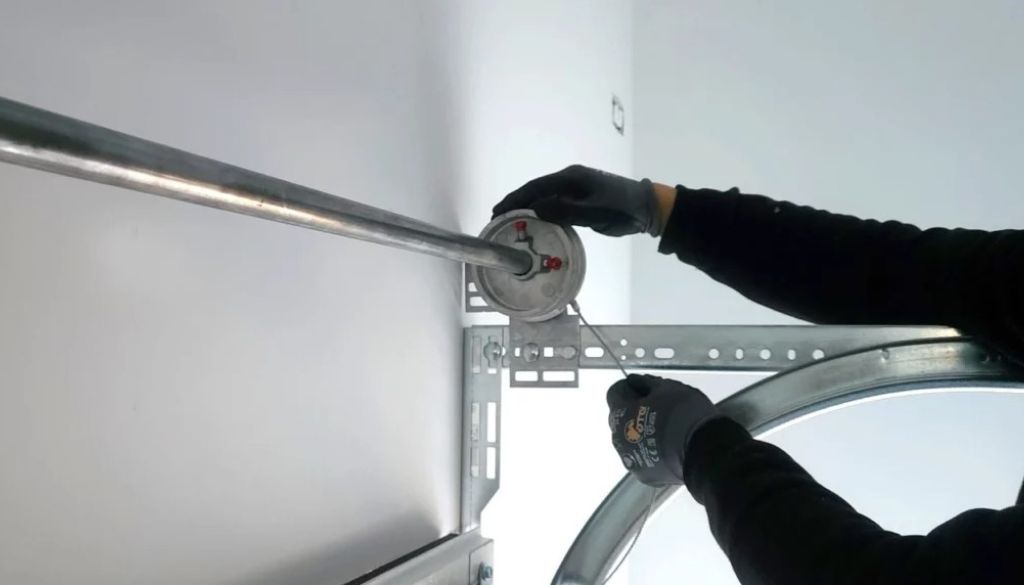
A drum has moved or become loose
On a typical torsion-spring sectional door, cable drums are secured to a shaft. If a drum shifts, the cable may no longer wind correctly on that side. The door can become uneven even though the cable itself is not broken.
Drums and their fixings are part of a loaded lifting system. Do not loosen drum set screws or attempt to reposition a drum yourself.
A problem with the springs or door balance
Springs counterbalance much of the door’s weight. A broken spring, incorrect spring adjustment or another balance problem can affect cable tension and door travel.
The arrangement depends on the door. Some sectional doors use a torsion spring above the opening; others use extension springs and pulleys. Roller and tilt doors can have different lifting mechanisms, so the same diagnosis does not apply to every style.
Damaged bottom brackets or cable attachments
On many sectional doors, lifting cables attach to brackets near the bottom corners. Damaged, corroded or loose attachment hardware may affect how the cable carries the load.
These brackets can be under substantial tension. Never remove or tighten cable-anchor hardware while trying to fix a slack cable.
Worn pulleys on an extension-spring door
Some extension-spring systems route their cables through pulleys. A worn, damaged or misaligned pulley can interfere with smooth movement and contribute to uneven cable tension.
Squealing, rubbing or grinding may be warning signs, but noise alone does not identify the failed component.
Incorrect opener travel settings or an obstruction
If the opener is set to travel too far when closing, or the door encounters an obstruction, cable tension can be disturbed on some systems. A cable may then unwind or come away from its drum.
The correct fix is to identify the door or opener problem and set the travel correctly. Adjusting an opener to force a crooked door closed can make matters worse.
Frayed, corroded or incorrectly sized cables
Lifting cables can suffer wear, rust, broken strands or damage where they rub against hardware. An incorrect replacement cable may also create a mismatch between sides. These issues need an assessment of the cable and the wider lifting system.
Gold Coast salt air and moisture can contribute to corrosion, making periodic visual inspections worthwhile.
Signs of a Loose Garage Door Cable
A loose cable can appear on either the left or right side. Watch for these signs without operating a door that already looks unsafe:
- A visible loop or sag in one lifting cable
- Cable sitting outside the drum grooves, or winding unevenly
- One side of the garage door hanging lower than the other
- A new gap below one corner when the door is closed
- Cable strands that appear kinked, frayed or rusty
- Scraping, slapping or grinding noticed before the fault appeared
- A door that recently jerked, tilted or stopped partway through travel
Not every sign proves that a cable is loose. Problems with rollers, tracks, springs and the opener can create similar symptoms.
Is a Loose Garage Door Cable Dangerous?
Yes. A cable that has lost tension can make the door unstable. The door’s weight may no longer be supported or guided as designed. Continued operation can damage tracks, drums, rollers and the other lifting cable. In some circumstances, the door can shift or drop suddenly.
A cable may look slack while other parts of the spring system still store considerable energy. That is why cable adjustment and spring work should be left to a qualified garage door technician.
If you suspect a loose cable, stop using the door and arrange an inspection promptly. Don’t treat it as safe just because the opener still moves it.
What to Do If a Garage Door Cable Is Slack on One Side
- Stop using the opener. Avoid another opening or closing cycle, even if the door moved on the previous attempt.
- Keep people and pets away. Do not stand under a damaged door or try to pass beneath one that is stuck open.
- Look from a safe distance. If you can see the cable, drum and door position without approaching moving or loaded parts, note anything visibly out of place.
- Do not touch the cable, spring, drum or bottom bracket. Don’t attempt to pull the cable tight, unwind it or move the door by hand.
- Take a photo only if it is safe. A photo from ground level may help explain the problem to the technician. Never climb or reach into the lifting mechanism to get a better shot.
- Arrange a professional assessment. Explain whether the door is open, closed or jammed, and whether your vehicle is trapped inside.
If the door is stuck open, tell the repairer about the security concern. Do not try to force it down or prop it up yourself.
Can You Tighten a Loose Garage Door Cable Yourself?
We don’t recommend it. A cable that has come loose often needs more than a simple adjustment, and the lifting system may still be under high spring tension.
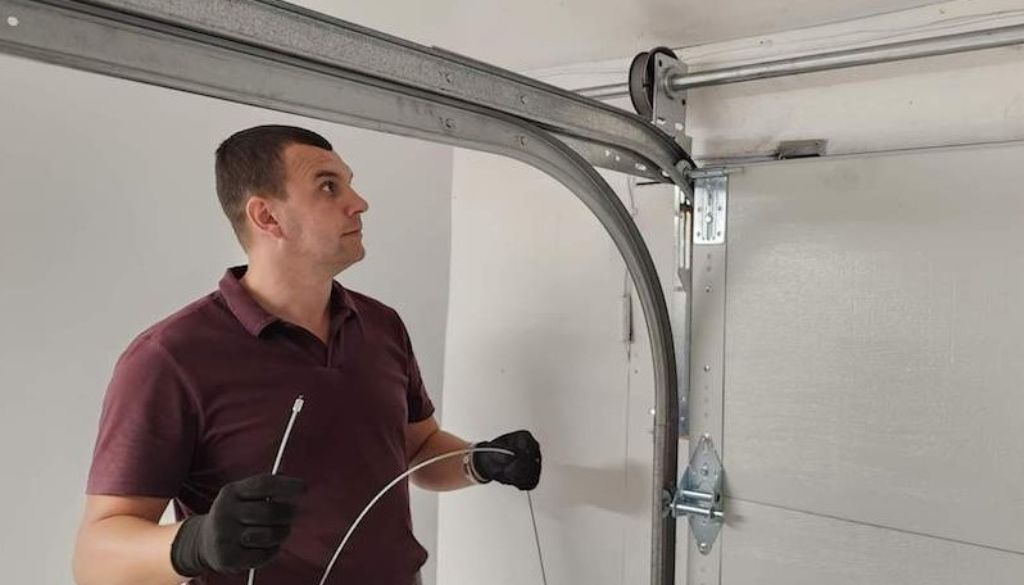
The correct repair depends on the cause. A technician might need to secure the door, inspect the spring and drum arrangement, correct the underlying fault, replace damaged parts and verify that both sides lift evenly.
You can look for visible wear during routine maintenance when the door is operating normally, but resetting cables, adjusting loaded brackets and changing spring tension are not DIY jobs.
How a Professional Repairs a Loose Garage Door Cable
A professional repair usually starts with finding out why the cable went slack. The technician may:
- Secure the door against unexpected movement.
- Inspect the lifting cables, drums, cable attachments, springs, rollers, tracks and opener settings.
- Check for cable damage, misalignment or worn components.
- Repair or replace faulty parts and restore the cable arrangement using the correct procedure for that door system.
- Check the door’s balance, movement and safety features before returning it to service.
Not every job involves the same spring-adjustment procedure. The steps vary between torsion-spring, extension-spring and other door systems.
The cost depends on whether the cable simply needs resetting or whether damaged cables, drums, springs or other components must be replaced. A proper diagnosis avoids paying for an adjustment that leaves the original problem unresolved.
How to Reduce the Risk of Loose Cables
Regular care can help you spot developing faults early:
- Check visually every few months. Look from a safe position for rust, fraying, slack or uneven cable winding.
- Keep the doorway clear. Remove stored items that could obstruct the door’s travel.
- Pay attention to changes. If a normally smooth door starts jerking, leaning or making new noises, stop and have it checked.
- Avoid DIY spring and drum adjustments. Cable tension is connected to the wider lifting system.
- Arrange regular servicing. A technician can inspect wear, alignment, attachments and the opener’s safety settings.
If you already see a loose cable, skip operational tests and book an inspection. Routine balance testing is only appropriate for a door known to be in safe working condition.
Frequently Asked Questions
Why is my garage door cable hanging loose?
Common causes include a cable slipping off the drum, a shifted drum, an obstruction, faulty cable attachment hardware or a spring and balance problem. A technician needs to inspect the system to confirm the cause.
Can I still use my garage door if one cable is loose?
No. Even if the door still moves, a slack cable can affect its stability and cause further damage. Stop using the opener until the fault has been assessed.
Is a loose cable the same as a broken garage door cable?
No. A loose cable may still be intact, while a broken cable has snapped. Both faults can make the door unsafe, and a cable off its drum can sometimes look broken from a distance.
Can I tighten the garage door cable myself?
Avoid attempting it. Cable tension and cable-anchor hardware can be connected to a highly loaded spring system. A professional should identify and correct the fault.
Why does my garage door look uneven?
Uneven lifting can result from cable, drum, spring, track or roller problems. A door leaning to one side should not be forced open or closed.
Can opener settings make a garage door cable come loose?
They can contribute on some door systems. Incorrect closing travel or an obstruction may allow a lifting cable to lose tension. Both the mechanical fault and the opener settings should be checked.
How often should I check my garage door cables?
A quick visual inspection every few months is sensible, with a more thorough check during professional servicing. Look for rust, broken strands or uneven winding, and avoid touching the loaded components.
Loose Garage Door Cable? Contact A1 Garage Doors Gold Coast
A cable hanging loose on one side is not something to ignore. A1 Garage Doors Gold Coast can inspect the fault, identify the cause and advise on the appropriate repair for your door system.
For homeowners in the northern Gold Coast, see our garage door repair service in Helensvale. Our team also assists customers across the wider Gold Coast area.
Call A1 Garage Doors Gold Coast on (07) 5515 0277 to discuss your garage door cable problem and arrange an assessment. Let us know if the door is jammed open or closed so we understand the situation before attending.
