
A garage door cable can look sound for years before you notice a few thin wires sticking out from its surface. Those broken strands are an important warning sign. Frayed garage door cables can lose strength and fail, leaving the door uneven, jammed or unable to move safely.
Knowing the signs of frayed garage door cables helps you recognise damage before a complete break. Here’s what to look for, where you can inspect safely and when to arrange professional replacement on the Gold Coast.
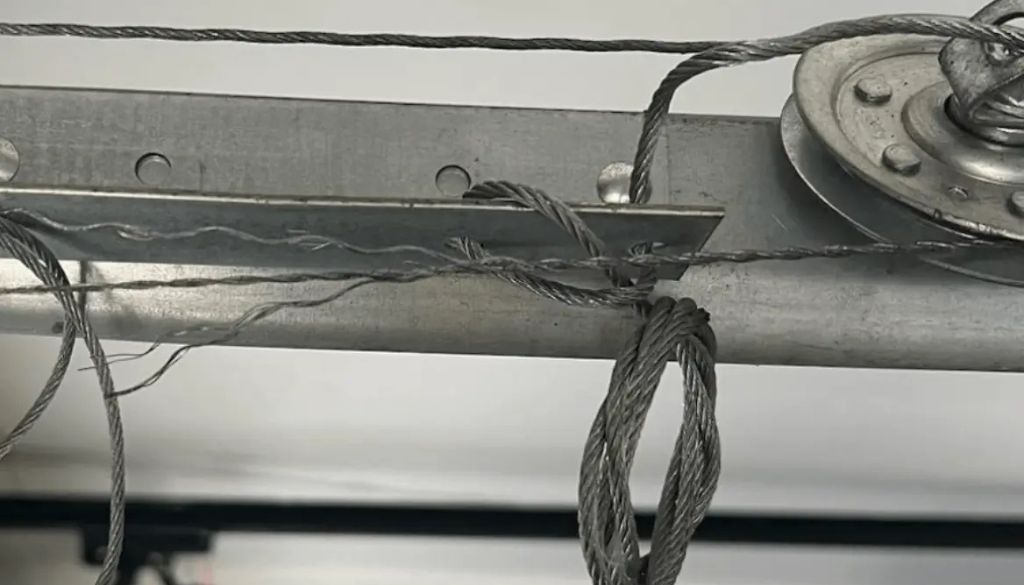
What Does a Frayed Garage Door Cable Look Like?
A sound lift cable has tightly wound steel strands with a consistent diameter. Damage may appear in several ways.
Broken strands or wire ‘whiskers’
Individual wires can break and protrude from the cable, giving it a fuzzy or brush-like appearance. Even a small number of visible broken strands deserves prompt professional attention. Do not run your fingers along the cable: the wire ends can be sharp.
Bird-caging or separation of strands
A cable may bulge where its strands have spread apart or twisted out of their normal arrangement. This type of distortion is a serious sign of damage. Stop using the door and arrange an inspection.
Flat, shiny or worn sections
Polished or flattened areas can indicate rubbing against a drum flange, pulley or another part. Repeated friction can reduce the cable’s strength, even if the damage is not obvious at first glance.
Rust or rough patches
Corrosion can weaken steel wires and make them more likely to break. Check the cable near its lower attachment points, where moisture and grime can collect. Salt air in coastal Gold Coast suburbs may increase corrosion risk.
Kinks or uneven winding
A kinked cable or one that crosses over itself on a drum may have been crushed or loaded incorrectly. Uneven winding is not always proof of fraying, but it is a fault that can damage a cable and should be investigated.
Other Warning Signs of Worn Garage Door Cables
Some cable problems first appear as changes in how the garage door looks or moves. Watch for:
- A cable that looks fuzzy, rusty, kinked or thinner in one section
- Scraping, rubbing or unusual metallic noises
- A door that hangs crooked or leaves a gap along one side
- Jerky, uneven or strained movement
- Slack cable or cable winding irregularly on a drum
- A door that becomes unusually difficult to open or close
These symptoms can also be caused by springs, tracks, rollers or other components. They do not confirm that a cable is frayed, but they are reasons to stop operating the door and have it checked.
Where to Check Garage Door Cables Safely
You can look for visible wear without attempting to diagnose or repair the tension system. If the door is already crooked, partly open or behaving unpredictably, stay clear and leave the inspection to a technician.
With the door fully closed and stationary, and only if the area is safe to approach, inspect from a safe distance:
- Lower cable attachments: Look for rust, broken strands or damage near the bottom brackets. Do not touch or loosen these brackets.
- Visible cable lengths: Look for protruding wires, kinks, discolouration or worn sections without touching the cable.
- Cable drums: Where visible, check whether the cables appear crossed or unevenly wound. Do not climb up to reach them.
- Pulleys on relevant door systems: Look for obvious cable misalignment without touching the pulley or spring assembly.
A torch or zoomed photograph can help you see damage from a safe position. Never pull, tighten, unwind or lubricate a damaged cable. Do not operate the door to get a better view.
What Causes Garage Door Cables to Fray?
Repeated use and metal fatigue
Each operating cycle bends and loads the cable. Over time, individual wires may fatigue, particularly where the cable changes direction around a drum or pulley.
Rust and coastal corrosion
Moisture and airborne salt can accelerate corrosion. Damaged protective coatings and dirt around low-level fixings may allow corrosion to take hold.
Rubbing and misalignment
Misaligned drums, tracks or brackets can make a cable rub against nearby components. Fixing the cable alone may not prevent the problem from returning if the underlying alignment fault remains.
Worn or seized pulleys
On doors that use a pulley system, worn bearings or poorly aligned pulleys can create additional friction and damage the cable surface.
Incorrect cable selection or installation
A cable that is the wrong length, type or load rating for the door may wind poorly or wear prematurely. Matching the replacement to the particular door system matters.
Why Frayed Garage Door Cables Are Dangerous
Garage door lift cables transfer significant force from the spring counterbalance system. As individual wires break, the remaining strands carry more of the load. A damaged cable may eventually part without a predictable final warning.
If a lift cable breaks, the door may drop on one side, twist in its tracks or jam. A damaged cable can also affect drums and other hardware. That is why visible fraying should be treated as a safety issue, not a cosmetic defect.
If your cable has already broken, read our guide to a garage door cable snapped on one side for the immediate safety precautions.
Can You Keep Using a Door With a Frayed Cable?
Do not continue operating a garage door with a visibly frayed or damaged lift cable. Keep people, pets and vehicles clear of the door and arrange professional assessment. Do not attempt to move the door manually, disconnect the opener while the door is open, or walk beneath a door that may be unstable.
If the door is stuck open, explain that when booking a technician. Do not try to prop it up or secure the cable yourself.
Repair or Replace: When Does a Cable Need Replacing?
A load-bearing steel cable with broken strands, bird-caging, severe wear or kinks generally needs replacement, not a temporary patch. Tape, clamps or makeshift splices do not restore its rated strength.
A technician will also inspect the opposite cable and related hardware. Replacing both lift cables as a pair is often advisable when they are the same age and condition, but the correct decision depends on the door design, manufacturer guidance and inspection findings.
The replacement cable must suit the door’s lifting system, dimensions and load requirements. If a worn drum, pulley or alignment issue caused the damage, that issue needs attention too.

How a Technician Checks and Replaces Frayed Cables
The work varies by door type, but a professional service typically involves:
- Securing the door and identifying the cable and spring arrangement.
- Inspecting related components, including drums, pulleys, brackets, tracks and rollers, to find the cause of wear.
- Making the counterbalance system safe using suitable equipment and procedures for that door.
- Replacing damaged lift cables with correctly specified parts and addressing related faults where required.
- Checking cable tracking, door balance and safety operation before returning the door to service.
This is not a DIY repair. Springs, drums and cable attachment points can remain under dangerous loads even when the door is stationary.
How to Reduce Cable Wear
- Look for visible wear periodically. Check from a safe distance, without touching cables or tensioned hardware.
- Keep the doorway clear. Obstructions can cause the door to bind and affect cable tracking.
- Pay attention to new noises or uneven travel. Stop using the door if its movement changes unexpectedly.
- Manage moisture where practical. Keep the surrounding area free of persistent standing water and debris.
- Arrange regular professional servicing. A technician can inspect cable condition and the components that affect its alignment and loading.
Do not attempt spring adjustments, cable tightening or manual balance tests on a door with suspected cable damage.
Frequently Asked Questions
Is a frayed garage door cable an emergency?
Visible broken strands or severe cable distortion can indicate a risk of failure. Stop using the door and arrange prompt professional assessment. A door that is crooked, jammed or partly open needs particular care.
How long do garage door cables last?
There is no reliable lifespan that applies to every installation. Usage, door weight, cable specification, maintenance, alignment and coastal conditions all influence wear. Condition matters more than age alone.
How often should garage door cables be replaced?
Cables are generally replaced when damage or excessive wear is found, or as required by the door manufacturer’s maintenance guidance. Regular inspections help identify the need before a complete failure.
Can I replace a frayed garage door cable myself?
Cable replacement involves parts of the garage door’s spring and counterbalance system that can store substantial energy. It should be handled by a suitably trained garage door technician.
Can I temporarily secure a frayed cable?
No. Do not tape, tie, clamp or splice a damaged lift cable. Keep the door out of use until a professional has assessed it.
What is the difference between a frayed cable and a snapped cable?
A frayed cable still has a continuous core but shows damage such as broken strands or distortion. A snapped cable has broken completely. Both require attention; a snapped cable may leave the door unstable immediately.
Should both garage door cables be replaced together?
Often, yes, especially where both cables have similar wear and service history. A technician should check the opposite cable and confirm the correct replacement approach for your door.
How much does it cost to replace frayed garage door cables?
The cost depends on the door type, cable specification, labour and whether other components need repair. For a fuller explanation of pricing factors, see our garage door cable replacement cost guide.
Noticed Frayed Garage Door Cables? Arrange a Professional Inspection
Fraying is a warning that a garage door’s lifting system may no longer be reliable. A professional inspection can establish whether the cables need replacing and whether another component is causing premature wear.
A1 Garage Doors Gold Coast helps homeowners with cable problems across the Gold Coast. If you are in the northern suburbs, you can contact our garage door repair team in Helensvale to discuss the problem and arrange an assessment.
Stop using a door with damaged cables and contact A1 Garage Doors Gold Coast for professional advice.
