
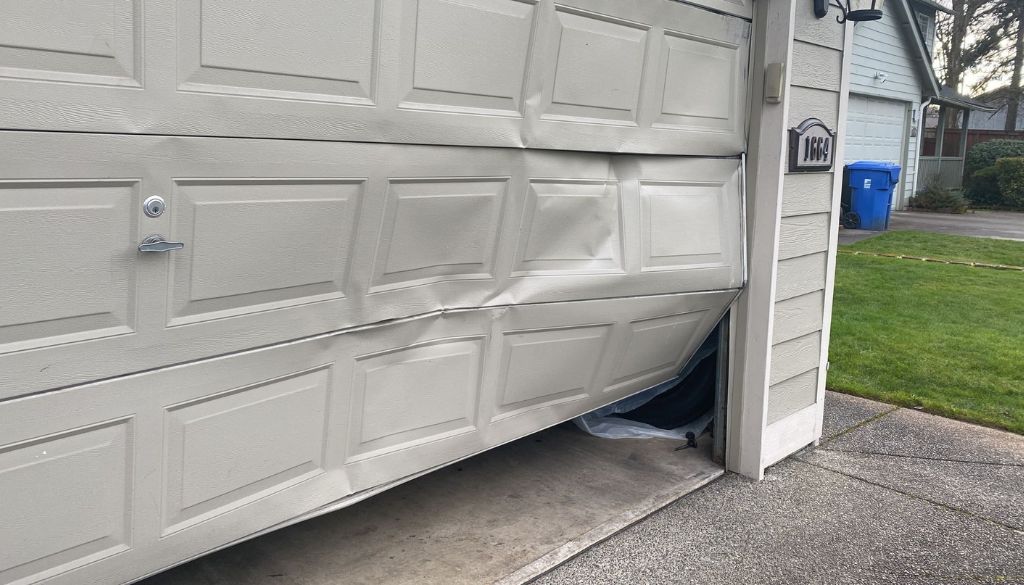
A dent in your garage door panel can be more than just an eyesore—it can also signal potential structural issues that may affect the safety and operation of your garage door. Whether the damage was caused by reversing the car too quickly, a flying basketball, hail damage, or simple wear and tear over the years, the question many homeowners face is:
Can it be repaired, or does it need replacing?
Understanding when to attempt a repair and when to call a professional can save you time, money, and frustration. This comprehensive guide walks you through a clear decision-making framework: Assess → Repair → Replace → Prevent. By the end, you’ll know whether a DIY approach is possible or if professional intervention is the safer choice.
Common Causes of Garage Door Panel Dents
Garage door dents are surprisingly common, and they can occur for a wide range of reasons. Being aware of the causes can help you prevent future damage. Common culprits include:
1. Vehicle Impact
Accidental collisions with cars or trucks in your driveway are among the most common sources of dents. Even low-speed bumps can leave noticeable damage.
2. Hailstorms and Extreme Weather
Hail can leave hundreds of small dents in steel and aluminum doors. Strong winds and flying debris can also cause dents and scratches.
3. Sports Equipment
Basketballs, soccer balls, and other recreational equipment can easily leave dents in lightweight metal panels if they hit with force.
4. Garage Clutter
Bins, ladders, garden tools, or bicycles accidentally hitting the door are frequent causes, especially in busy households.
5. Vandalism
Unfortunately, intentional damage by vandals can occur. Even a minor dent from a prank can compromise the door’s function.
6. Temperature Fluctuations
Extreme heat or cold can cause metal panels to expand and contract. Over time, this stress can lead to warping, buckling, or minor dents.
7. Long-Term Wear and Corrosion
Aging doors, especially those exposed to moisture or coastal environments, can develop rust spots that make the metal more vulnerable to dents.
If your dent is accompanied by operational issues, it’s a good idea to review a Garage Door Troubleshooting Guide for a complete inspection: Garage Door Troubleshooting Guide
Types of Garage Doors & How Material Affects Repair
Not all dents are equal, and the type of garage door you own plays a significant role in determining whether a repair is feasible.
Sectional Garage Doors
These doors are made of horizontal panels connected by hinges and rollers. Most modern homes have sectional steel or insulated steel doors. Minor dents are generally repairable, but large dents near hinges may require panel replacement.
Roller Garage Doors
Single-sheet curtain-style doors roll into a drum above the opening. These doors are more susceptible to dents due to their continuous metal surface. Repairs often require specialized techniques to maintain smooth rolling operation.
Garage Door Materials and Dent Susceptibility
| Material | Dent Risk | Repair Feasibility | Notes |
|---|---|---|---|
| Steel (thin gauge) | Moderate | Often repairable | Most common type of garage door |
| Aluminum | High | Repairable if shallow | Lightweight and prone to dents |
| Wood | Low | May require carpentry | Cracks easily, expensive to repair |
| Fiberglass | Low | Limited options | Can crack, difficult to repair seamlessly |
| Vinyl | Very low | Rarely needs repair | Durable and dent-resistant |
| Insulated Steel | Moderate | Complex | Requires careful filler work to preserve insulation |
Note: Insulated steel panels require extra care—any damage can compromise insulation effectiveness.
How to Assess the Severity of a Dent
Before deciding on a repair or replacement, it’s important to evaluate the dent’s size, location, and impact on operation.
1. Size and Depth
* Small, shallow dent: Mostly cosmetic, usually repairable at home.
* Deep or creased dent: May indicate structural compromise.
* Buckled panel: Often requires replacement to restore proper function.
2. Location of the Dent
* Near hinge joints: Can affect alignment.
* Close to tracks: May hinder smooth operation.
* At panel edges: Can damage weather seals.
* Around weather seals: Could lead to energy loss and water ingress.
Damage near hinges or tracks may not just be cosmetic—it can affect the overall operation of your garage door.
3. Operational Impact
Ask yourself:
* Does the door still open and close smoothly?
* Is the door sticking or jamming?
* Has alignment shifted?
* Are the rollers under unusual strain?
* Is the weather seal compromised?
If the dent affects movement, mechanical strain may worsen over time, potentially damaging the opener motor and other components. For more information on opener options, check: Garage Door Opener Comparison Guide
DIY Garage Door Panel Dent Repair (For Minor Damage)
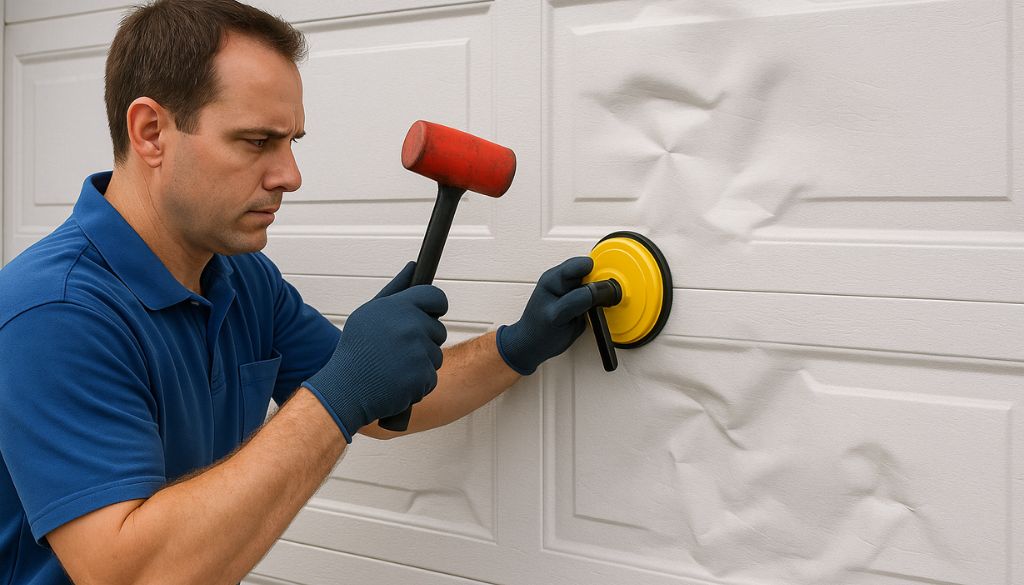
Small dents in steel or aluminum panels can often be repaired without professional help, provided you have the right tools and materials.
Tools and Materials Needed
* Rubber mallet
* Block of wood
* Auto body filler (putty)
* Putty knife
* Sandpaper (120–320 grit)
* Primer
* Acrylic or enamel paint
* Clear coat (optional)
Step-by-Step Guide: Filling and Painting a Dent
1. Clean the area thoroughly to remove dirt, grease, and debris.
2. Sand the dented surface lightly to remove paint and create a rough base for filler.
3. Apply auto body filler slightly above the dent surface using a putty knife.
4. Allow proper curing time according to the filler’s instructions.
5. Sand smooth and feather the edges to blend with the surrounding panel.
6. Apply primer to the repaired area.
7. Paint in thin, even coats, blending into the surrounding area.
8. Apply clear coat if needed to protect the paint and add shine.
Professional Tips for a Seamless Finish
* Use bright side lighting to reveal imperfections.
* Apply filler in thin layers rather than one thick layer.
* Allow proper drying time; don’t rush the process.
* Match manufacturer paint codes when possible for a uniform look.
* Test paint on an inconspicuous area before applying to the dent.
When Panel Replacement Is Necessary
Not every dent can be safely repaired. Certain signs indicate that replacement is the safer and more cost-effective solution.
Signs You Should Replace the Panel
* Large or deep dents that affect structural integrity
* Creased or buckled metal
* Cracks in the panel
* Severe rust that compromises strength
* Multiple damaged panels
* Insulation damage that affects energy efficiency
If your garage door no longer runs smoothly, operating it can place strain on rollers, hinges, and openers, potentially causing additional damage. For urgent cases, check: Emergency Garage Door Repair
Can You Replace Just One Panel?
Yes, but there are challenges:
* Matching manufacturer and model
* Colour fading over time
* Panel design changes
* Insulation compatibility
If your door is older than 10–15 years, finding matching panels can be difficult. Professional services can help identify compatible panels and ensure proper alignment.
Repair vs Replace: Cost and Long-Term Value
| Factor | Repair | Replace Panel |
|---|---|---|
| Cost | Lower for minor dents | Higher upfront |
| Appearance | Good for small damage | Like-new finish |
| Structural Strength | May remain compromised | Fully restored |
| Energy Efficiency | Unchanged | Improved if insulated |
| Long-Term Durability | Depends on repair quality | Higher |
Key takeaway: Minor cosmetic repairs are usually cost-effective. Large, structural dents often justify full replacement.
How Dents Affect Garage Door Operation
Even minor dents can have hidden consequences. They can:
* Push rollers slightly out of alignment
* Cause uneven panel movement
* Strain hinges
* Put extra pressure on the opener motor
* Compromise weather seals
Over time, this can lead to noisy operation, jerky movement, and premature component wear. If mechanical strain is present, don’t delay repair or replacement. Minor dents and bends can affect your garage door’s performance and appearance, but our step-by-step Bent Garage Door Panel Repair guide makes it easy to restore your door at home.
Why Professional Assessment Matters
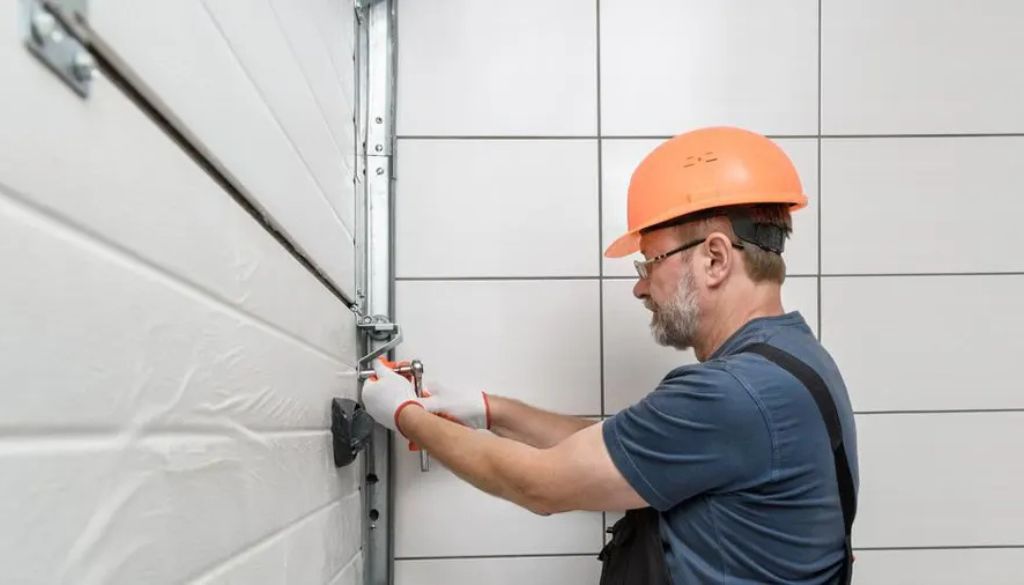
A trained technician can:
* Identify hidden structural damage
* Check door balance
* Assess track alignment
* Confirm spring tension is safe
* Preserve manufacturer warranties
* Prevent further mechanical strain
A1 Garage Doors Gold Coast has been serving residential and commercial doors since 2020. For expert dent assessment or panel replacement consultation:
(07) 5515 0277
1 Waterford Ct, Bundall QLD 4217
goldcoastgaragedoorrepair.com.au
Preventing Future Garage Door Dents
Preventing dents is often easier and cheaper than repairing them. Consider these measures:
* Install protective bumper strips on walls or pillars
* Park vehicles with safe clearance from the door
* Keep garage clutter-free
* Inspect panels regularly
* Repair small dents early before they worsen
* Maintain hinges, rollers, and tracks
Regular maintenance prevents minor cosmetic damage from becoming structural.
Frequently Asked Questions
Can a dented garage door panel be fixed?
Yes—small, shallow dents are typically repairable. Deep structural damage may require replacement.
Is it cheaper to repair or replace?
Minor dents are cheaper to repair. Severe or multiple panel damage often justifies replacement.
Can hail damage be repaired?
Small hail dents can usually be repaired. Widespread damage may require panel replacement.
Will insurance cover garage door dent repair?
Often yes, particularly for hail or vehicle impact. Check your policy for details.
Does a dent affect garage door security?
Yes. Severe dents can weaken structural integrity and affect locking mechanisms.
Schedule a Professional Garage Door Dent Inspection
If you’re unsure whether to repair or replace your garage door panel, a professional inspection can give you clarity. A trained technician can evaluate the damage, recommend the best solution, and prevent further costly issues.
A1 Garage Doors Gold Coast offers expert panel assessments and repair services across the Gold Coast.
With proper assessment, repair, and preventative measures, you can extend the life of your garage door and keep it looking and functioning like new. Minor dents don’t have to turn into major headaches—knowing when to repair and when to replace is the key.
