
Perhaps a garage door cable has come off its drum more than once. The door may now hang crooked or refuse to move. It is tempting to put the cable back, but repeated slipping usually means another fault has not been addressed.
If your garage door cable keeps coming off the drum, the cable itself may not be the problem. Something may be creating slack, affecting the drum or stopping the door from travelling evenly. The underlying cause needs to be identified before the door is used again.
This guide explains how cable drums work, why cables can repeatedly slip out of place, what a technician checks and which repairs may be needed.
How the Cable and Drum Work Together

Understanding the cable and drum arrangement helps explain why a cable can slip.
On many sectional doors with torsion springs, steel lift cables attach near the bottom corners and run up to grooved drums on a shaft above the opening. The grooves guide the cables as the door opens and closes. Other door designs, including extension-spring systems, use different cable and pulley arrangements.
The spring counterbalances much of the door’s weight, while the cable and drum system transfers that force. The cables need the correct tension and a clear winding path. If the door binds or the drum moves out of alignment, a cable may loosen or leave its groove.
Garage Door Cable Keeps Coming Off Drum? Causes Explained
Several faults can cause repeated cable slips. The most likely cause depends on the door design and what happens just before the cable comes off.
The door closed onto an obstruction
If a closing door meets an obstruction, it may stop unevenly or lose cable tension as the mechanism continues to move. A cable can then leave its drum groove. The obstruction and the door’s safety-reversal system both need checking before operation resumes.
Worn or broken torsion springs
A worn, incorrectly adjusted or broken spring can affect door balance and cable tension. A broken spring is a serious fault. Do not operate the door or attempt to test the spring yourself.
Drum set screws working loose
On a torsion-spring system, set screws secure the cable drums to the shaft. If a drum shifts, one cable can wind differently from the other and the door may move unevenly. The drum and shaft must be assessed and secured by a qualified technician.
Worn, damaged or wrong-size drums
A damaged drum, cracked flange or drum that is incompatible with the door can stop the cable winding correctly. A technician can check its condition and suitability for the door’s height and lifting system.
Worn pulleys on some extension-spring doors
Some sectional doors use extension springs and pulleys instead of overhead torsion drums. On those systems, worn or misaligned pulleys can cause cable tracking problems. They should be assessed as a separate fault rather than treated as a drum problem.
Bent tracks and worn rollers
Bent or misaligned tracks, worn rollers and obstructions can cause the door to bind. Uneven movement may reduce tension on one cable. Gold Coast humidity and coastal exposure can also contribute to corrosion on metal components.
Frayed, stretched or wrong-length cables
Frayed, kinked, corroded or incorrectly sized cables may not track properly on the drum. A cable fitted at the wrong length can also create uneven tension. Damaged cables should be assessed for replacement, not simply wound back on. If you notice broken strands or corrosion, see our guide to the signs of frayed garage door cables and keep the door out of use until it is inspected.
The door is out of level
If the door is not level, the cables may carry uneven loads. The underlying issue could involve a shifted drum, cable length, damaged components or the door’s balance. Correcting the cable without addressing the cause may lead to another failure.
Opener force and limit settings
Incorrect close-travel or force settings can contribute to cable slack, depending on the opener and door system. If the problem appeared after an adjustment, have the settings and safety-reversal operation checked professionally. Do not increase the opener force to push through a mechanical fault.
Why It Keeps Happening: The Repeat-Offender Pattern
If a cable is rewound without finding out why it slipped, the same fault may remain. The cable can come off again during the next few cycles or much later, depending on the cause.
For example, a shifted drum still needs to be secured, a worn cable may need replacing and an obstruction must be cleared. A lasting repair addresses the reason for the lost tension as well as restoring correct cable tracking.
A cable leaving its drum can kink, fray or catch on surrounding hardware. The door may twist or become stuck, and further operation can damage the tracks, rollers or opener. Stop using the door after a cable slip, even if the cable appears to have returned to place.
How We Diagnose a Cable That Keeps Coming Off the Drum
A technician should diagnose the system before attempting to reset a displaced cable.
The inspection may include:
- The drum grooves and flanges for wear, cracks and cable bite marks.
- The set screws on both drums, checked and torqued correctly.
- Spring condition and door balance, tested only after the door has been made safe
- The cables themselves for fraying, stretch, corrosion and correct length.
- Tracks and rollers for bends, misalignment, worn wheels and built-up grime.
- Bottom brackets for loose fasteners and rust.
- Opener limits and force settings, especially if the fault started after a DIY adjustment.
The technician can then recommend the repair needed to restore safe, level operation.
Can You Put the Cable Back on the Drum Yourself?
A displaced cable may look easy to push back into place, but it is connected to a high-tension lifting system.
Do not touch the cable, drum, bottom bracket or springs. The door may be unstable, and tensioned components can move suddenly. Trying to rewind a cable or adjust drum set screws without specialist training can cause serious injury.
Keep people and vehicles clear of the door, avoid using the opener and do not pull the emergency release cord if the door is open or unstable. You can take photos from a safe position for your technician. Leave cable and spring work to a professional.
How a Technician Fixes a Cable That Keeps Coming Off the Drum
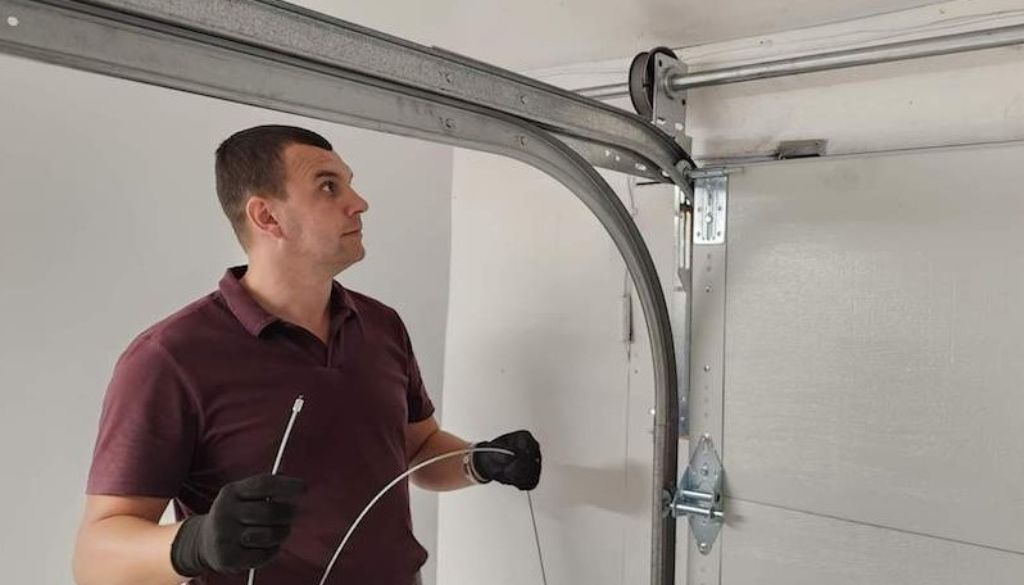
The right repair depends on what caused the cable to lose its position:
| Cause found | The repair |
|---|---|
| Obstruction or opener limit fault | Make the door safe, clear the obstruction, restore the cable and check opener limits and safety reversal |
| Shifted drum or loose set screws | Reposition and secure the drum, then restore correct cable tension |
| Damaged or unsuitable drum | Replace with a compatible drum and verify cable tracking |
| Frayed, kinked or damaged cable | Replace the affected cable; assess whether its matching cable should also be replaced |
| Faulty or broken spring | Repair or replace the appropriate spring components and restore door balance |
| Bent track or worn rollers | Repair or replace damaged parts and check door alignment |
| Corroded or damaged bottom bracket | Replace or repair components using appropriate spring-tension safety procedures |
After repairs, the technician should check door balance, cable tracking and safe opener operation before returning the door to service.
How to Stop the Cable Coming Off the Drum Again
Preventative checks can help identify wear before another cable slip.
- Keep the door’s travel path clear. Most repeat faults start with something left in the doorway.
- Pay attention to changes in operation. New scraping noises, uneven travel or jerking warrant a professional check.
- Inspect visually from a safe distance for fraying, rust or cables that no longer sit correctly in their grooves.
- Leave opener settings alone. If the door is not closing properly, the fix is rarely more force.
- Arrange regular servicing. A technician can inspect cables, drums, springs and hardware for wear and corrosion.
Frequently Asked Questions
Why does my garage door cable keep coming off the drum?
Possible causes include an obstruction, incorrect opener settings, a shifted drum, damaged cables, spring problems or binding tracks. The cause needs checking before the cable is reset.
Garage door cable off drum — is it safe to use the door?
No. A cable off its drum can leave the door unbalanced or unstable. Continuing to operate it may damage the door or cause injury. Keep clear and book an inspection.
Can a garage door cable be reused after slipping off the drum?
A technician may be able to reuse a cable if it remains undamaged and suitable for the door. Kinks, broken strands, corrosion or other damage can make replacement necessary.
Is it normal for the cable to be loose when the door is open?
On a correctly operating cable-and-drum system, the lift cables should remain properly seated and tensioned throughout normal movement. Visible slack can indicate a fault. Do not try to test an unstable door.
Does a cable off the drum mean I need a new door?
Not necessarily. Many cable and drum faults can be repaired without replacing the whole door. However, significant damage to panels, tracks or structural components may change the recommendation.
Why does the door hang crooked when the cable comes off?
On a typical two-cable sectional door, a displaced cable can leave one side less supported than the other. The door may tilt and its rollers may bind in the tracks.
Can a damaged drum cause uneven door movement?
Yes. A damaged drum or one that has shifted on its shaft can affect how its cable winds, potentially causing uneven movement or another cable slip.
Cable Keeps Coming Off the Drum? Let’s Fix It Properly
A garage door cable that repeatedly slips off its drum needs a proper diagnosis. A1 Garage Doors Gold Coast provides repair services throughout the Gold Coast and can assess the cable, drum and related lifting components.
For service in the northern suburbs, contact our garage door repair team in Helensvale to arrange an inspection. Let the team know if the door is stuck open or unsafe.
Contact A1 Garage Doors Gold Coast to have a recurring cable drum problem assessed and repaired.
