
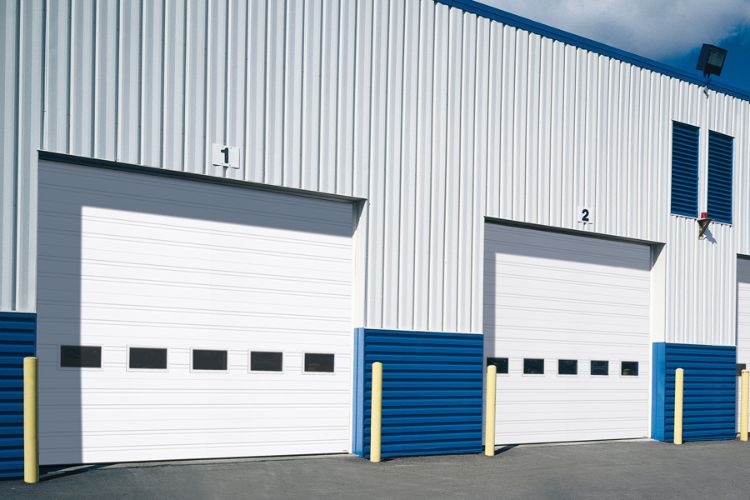
Choosing the right commercial garage door size is one of the most important decisions business owners, builders, and facility managers face when fitting out warehouses, retail premises, or industrial facilities. Get it wrong, and you could end up with access problems, operational bottlenecks, or costly modifications down the track. This guide breaks down everything you need to know about commercial garage door sizes in Australia, from standard dimensions to custom solutions for unique applications, helping you make an informed decision that serves your business for years to come.
Larger commercial garage doors require more frequent inspections due to their heavier components and higher usage cycles—our comprehensive guide on garage door maintenance and servicing outlines the essential checks for industrial doors including spring tension testing, track alignment, and lubrication schedules that vary based on door size and weight.
Proper sizing is only one part of long-term performance—routine maintenance, including a timely squeaky garage door fix, can help keep your commercial garage door operating smoothly and quietly for years.
What Are Commercial Garage Doors?
Commercial garage doors differ significantly from their residential counterparts. While a standard residential garage door might accommodate a single car or a small trailer, commercial doors are engineered for heavy-duty applications where durability, security, and operational efficiency are paramount.
The size of your commercial garage door often depends on the type of garage door materials you choose, as different materials offer varying levels of strength, insulation, and durability for specific business applications.
These doors are built to withstand frequent daily cycles, often operating dozens or even hundreds of times per day in high-traffic environments. They feature reinforced panels, heavy-gauge steel construction, and industrial-grade components designed to handle the demands of forklifts, delivery trucks, and constant vehicle movement.
Common industries relying on commercial garage doors include warehousing and logistics, manufacturing facilities, automotive workshops, retail loading docks, distribution centres, agricultural operations, and fire stations. Each application brings unique requirements for door sizing, and understanding these needs is essential before selecting your door dimensions.
When selecting a new commercial garage door, the size determines which door type will work best—sectional doors suit standard warehouse openings while roller doors are ideal for spaces with limited headroom, and our guide on choosing a new garage door on the Gold Coast covers all available styles including steel, aluminium, and insulated options for commercial applications.
Standard Commercial Garage Door Sizes in Australia
Australian commercial garage doors typically fall within established size ranges, though custom manufacturing allows for virtually any dimension. Standard sizing provides the most cost-effective solution when your opening falls within these parameters.
The size of your commercial garage door directly impacts repair and installation costs, with larger industrial doors requiring heavier springs, more powerful motors, and reinforced tracks—check our breakdown of garage door repair costs in Australia to understand how door dimensions affect pricing for springs ($150-$300), motor work ($200-$500), and panel replacement ($250-$800).
Standard commercial door widths generally range from 2,400mm to 6,000mm, with heights spanning 2,700mm to 5,000mm. Semi-industrial applications often fall in the 3,000mm to 4,200mm width range, while full industrial specifications extend considerably wider.
| Door Category | Width Range | Height Range |
| Semi-Industrial | 2,400mm – 4,200mm | 2,400mm – 3,600mm |
| Full Commercial | 3,000mm – 6,000mm | 3,000mm – 5,000mm |
| Heavy Industrial | 5,000mm – 12,000mm+ | 4,000mm – 8,000mm+ |
Roller Door Size Ranges
Commercial roller doors remain the most popular choice for Australian businesses due to their space efficiency and reliability. These doors coil into a compact drum above the opening, making them ideal for premises where ceiling space is limited or where maximum vehicle clearance is required. Their vertical operation means no outward swing that could interfere with vehicles or pedestrians near the opening. Understanding whether your door is properly balanced is an important part of maintaining safe and reliable operation, so homeowners and business owners can benefit from a garage door balance test before addressing larger door issues.
Standard commercial roller door widths typically range from 2,400mm to 5,500mm, though manufacturers can produce doors exceeding 7,000mm for specialised applications. Heights commonly span from 2,700mm to 4,800mm, with high-clearance variants reaching 6,000mm or more for facilities handling tall vehicles or stacked goods.
When specifying roller doors, remember that the coil drum requires headroom above the opening. This typically adds 300mm to 600mm depending on door height and material thickness.
Sectional and Overhead Door Sizes
Sectional overhead doors consist of horizontal panels that travel vertically before transitioning along ceiling-mounted tracks. These doors offer excellent insulation properties and can accommodate larger openings than many roller door systems. The panel construction also provides superior sealing against weather, dust, and noise, making them popular in temperature-controlled facilities and premises near residential areas.
Commercial sectional doors commonly range from 3,000mm to 8,000mm in width and 3,000mm to 6,000mm in height. They require substantial headroom (typically 350mm to 500mm) plus track depth running back into the ceiling space, usually matching or exceeding the door height.
Custom Commercial Garage Door Sizes
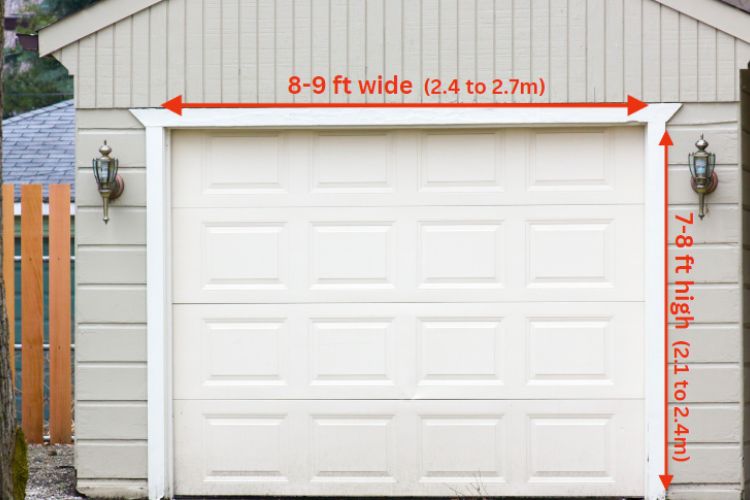
When standard sizes do not suit your building’s requirements, custom manufacturing becomes necessary. This commonly occurs in heritage buildings with non-standard openings, purpose-built facilities designed around specific equipment, retrofitted premises where structural modifications are impractical, and applications requiring unusual height-to-width ratios.
Accurate measurement is critical for custom doors. You will need to record the clear opening width and height, available headroom above the opening, side room on both sides of the opening, and back room (ceiling depth available for tracks). Professional measurement by experienced technicians helps avoid costly errors and ensures your door operates correctly from day one. Even small measurement discrepancies can cause binding, uneven wear, or security gaps that compromise your premises.
Choosing the Right Door Size for Your Business
Selecting the correct door size involves more than simply measuring your opening. Consider the largest vehicles or equipment that will pass through, including forklifts with elevated loads, delivery trucks, and any specialised machinery. Allow a minimum of 150mm clearance on each side and 200mm above the tallest load. Future-proofing your selection by allowing extra clearance can prevent costly upgrades if your operational needs expand.
Traffic frequency also influences your choice. High-cycle environments benefit from wider doors that reduce bottlenecks and faster-operating mechanisms. If your premises experience significant wind exposure, particularly common along the Gold Coast and coastal Queensland regions, consider wind-rated doors with reinforced guides and Windlocked systems that maintain security during severe weather. Insurance requirements may also specify wind ratings for commercial properties in cyclone-prone areas. The opener system for commercial garage doors must be appropriately sized to handle the increased weight and frequent operation cycles—if your current opener struggles with your door size, our garage door opener repair guide covers troubleshooting steps and when upgrading to a commercial-grade unit becomes necessary for reliable daily operation.
Commercial Garage Door Applications by Industry
Warehouses and factories typically require doors between 4,000mm and 6,000mm wide to accommodate pallet trucks and container access. Heights of 4,500mm or greater allow for stacked goods on forklifts. Many logistics operations opt for multiple door bays to maintain workflow when one door requires maintenance or during peak periods.
Retail shopfronts and storage facilities generally use smaller commercial doors in the 3,000mm to 4,200mm range, balancing security with aesthetic considerations. COLORBOND steel finishes offer durability while complementing building facades. Many retail operators choose perforated or mesh options that allow visibility while maintaining security after hours.
Automotive workshops, logistics hubs, and distribution centres demand doors sized for the specific vehicles they service. A facility handling B-double trucks will need significantly larger openings than one focused on light commercial vehicles. Consider both current requirements and potential future expansion when specifying your door dimensions.
Commercial garage doors over 3 metres wide typically require heavy-duty motors rated for the door’s weight and cycle frequency—our detailed guide on garage door motor replacement costs explains how to match motor specifications to door size, with industrial units ranging from $400-$800 compared to $200-$400 for standard residential motors.
Automation, Motors and Clearance Considerations
Most commercial installations incorporate automatic operation for efficiency and safety. Motor selection depends on door size, weight, and cycle frequency. Larger doors require more powerful motors, and high-cycle applications benefit from three-phase industrial units designed for continuous operation. Safety features including photo-eye sensors, edge detection, and emergency stop functions are standard requirements for automated commercial doors.
Headroom requirements vary by door type. Roller doors need minimal headroom (typically 300mm to 600mm for the coil drum), while sectional doors require headroom plus back room equal to or greater than the door height. Always verify these measurements before finalising your building design or door selection.
Maintenance, Compliance and Australian Standards
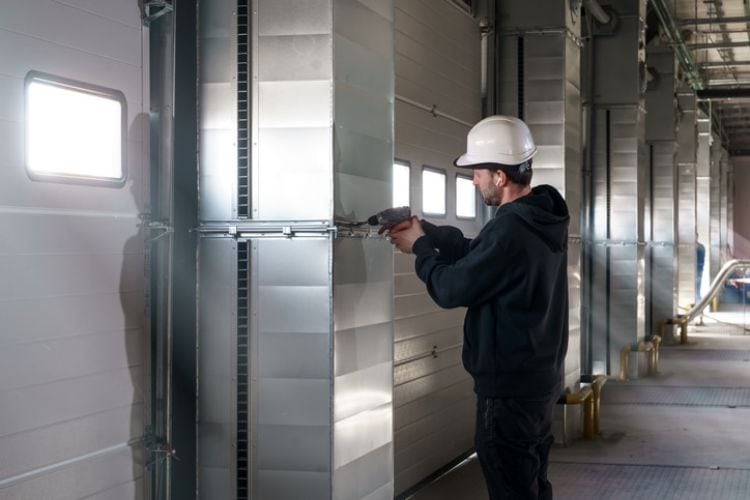
Commercial garage doors in Australia should comply with relevant Australian Standards for safety and quality. These standards cover structural integrity, safety device requirements, and operational specifications. Working with established suppliers and installers ensures your doors meet these requirements and that documentation is available for insurance and compliance purposes.
Regular maintenance extends door lifespan, reduces unexpected failures, and maintains safe operation in high-traffic environments. Neglecting routine servicing often leads to premature component failure, which can halt operations at critical times and result in expensive emergency repairs.
Scheduled servicing should include spring tension checks, track alignment verification, safety sensor testing, weatherseal inspection, and motor performance evaluation. In demanding commercial environments, quarterly inspections are often recommended, with monthly checks for very high-cycle installations.
Frequently Asked Questions
What is the standard size of a commercial garage door?
Standard commercial garage doors in Australia typically range from 3,000mm to 6,000mm wide and 3,000mm to 5,000mm high. However, sizes vary considerably based on application, with semi-industrial doors starting smaller and heavy industrial doors extending well beyond these ranges.
Can commercial garage doors be custom made?
Yes, commercial garage doors can be manufactured to virtually any dimension. Custom sizing is common for heritage buildings, purpose-built facilities, and applications with unusual clearance requirements. Professional measurement ensures accurate specifications for seamless installation.
How do I measure for a commercial roller door?
Measure the clear width and height of your opening, then record available headroom above the opening for the coil drum (minimum 300mm to 600mm typically required). Also note side room clearance and any obstructions. For accuracy, have measurements verified by experienced commercial door technicians.
What clearance is needed for automated commercial doors?
Automated roller doors typically require 300mm to 600mm of headroom for the motor and coil assembly. Sectional doors need headroom plus ceiling depth (back room) matching or exceeding the door height. Side room requirements depend on track configuration, usually 100mm to 150mm minimum per side.
Need Help Choosing the Right Commercial Door Size?
Getting commercial garage door sizing right the first time saves money and prevents operational headaches. Whether you need a standard roller door for your workshop or a custom-sized solution for a large warehouse opening, professional guidance makes all the difference.
Choosing the correct commercial garage door size is only part of ensuring long-term performance—professional installation and maintenance are just as important. If you’re looking for reliable Garage door services in Nerang, our experienced team provides expert solutions for both residential and commercial properties.
A1 Garage Doors Gold Coast provides expert advice on commercial and industrial garage door sizing across the Gold Coast and Brisbane regions. Our experienced technicians can assess your premises, take accurate measurements, and recommend the ideal door specifications for your business needs.
Contact us today on (07) 5515 0277 for a free sizing consultation, or visit our website at goldcoastgaragedoorrepair.com.au to learn more about our commercial garage door services.
