
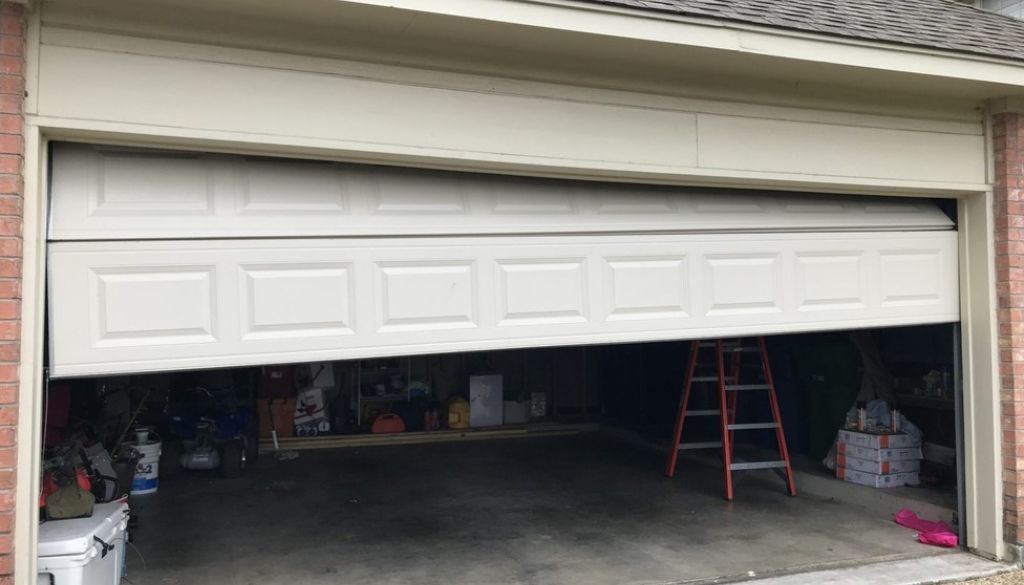
Your garage door is almost certainly the heaviest moving object in your home. A double sectional door can weigh well over 100 kilograms, yet a healthy one lifts with two fingers. That’s not the motor doing the work — it’s the counterbalance system, and when it drifts out of adjustment, everything downstream starts to suffer.
Balance is one of those things homeowners rarely think about until something breaks. The door gets a little slower. The opener starts to groan. One morning it shudders halfway up and stops. By then the springs have usually been under-supporting the door for months, quietly grinding the opener down with them.
The good news is that checking balance takes about two minutes and requires no tools. This guide walks through what balance actually is, the warning signs worth acting on, a safe step-by-step test you can run yourself, and the clear line between what you can check and what needs a technician.
Why Does Garage Door Balance Matter?
A properly balanced garage door is essentially weightless in motion. The springs offset almost all of the door’s mass, so the door moves smoothly through its full travel and stays put wherever you leave it. Everything else in the system — tracks, rollers, cables, opener — is designed around that assumption.
When balance is correct, the opener is really just a guide. It starts the movement, controls the speed and stops the door at the right point. It was never engineered to haul the full weight of a heavy door up a set of tracks, and it won’t last long if it’s asked to.
Balance also has a direct safety dimension. A correctly counterbalanced door descends in a controlled way even without power. An unbalanced one can drop, slam or reverse unpredictably.
What Keeps a Garage Door Balanced?
The springs do the heavy lifting. Torsion springs mount on a shaft above the opening and wind up as the door closes, storing energy that’s released to assist the lift. Extension springs run alongside the horizontal tracks and stretch to achieve the same result. Either way, the spring is calibrated to the specific weight of your door.
Rollers, hinges, cables and tracks handle the rest. They keep friction low and movement even. Worn rollers or a bent track add resistance that can feel exactly like a balance problem — which is why the two get confused so often.
The opener sits on top of all that. It supplies a small amount of assistance and a lot of control. It is not a lifting mechanism.
What Happens When a Garage Door Is Unbalanced?
The load shifts. Whatever the springs stop supporting, the opener has to make up, and it does so by drawing more current, running hotter and working harder on every cycle. Motor fatigue, stripped gears and premature failure follow.
The door itself wears faster too. Uneven tension pulls the door out of square, loads one cable more than the other, and accelerates wear on rollers and hinges. Many of the common garage door problems homeowners report — sagging, sticking, uneven closing — trace back to a counterbalance that’s no longer doing its job.
Signs Your Garage Door May Be Unbalanced
The Door Feels Very Heavy
Disconnect the opener and lift the door by hand. If it feels like genuine effort — the sort where you’d want a second pair of hands — the springs aren’t carrying their share. A correctly balanced door of any size should lift with modest, even pressure.
Heaviness is the single most reliable symptom of a spring problem. It’s also the point at which you should stop and call someone rather than investigating further.
The Door Opens or Closes Unevenly
Watch the door through a full cycle. Jerking, hesitation, one side leading the other, or a visible tilt in the bottom rail all suggest uneven load. That can mean a weakening spring, but it can also mean a bent track, a seized roller or a stretched cable — the symptoms overlap almost entirely.
The Garage Door Slams or Drops
A door that accelerates on the way down, or drops the last section, has lost counterbalance. This is the symptom to take most seriously. Stop using the door, keep people and vehicles clear of the opening, and arrange service.
The Opener Struggles
Humming without movement, slow travel, straining at the same point every cycle, or the opener stopping and reversing partway are all signs the motor is fighting resistance it wasn’t built for. Persistent strain shortens opener life considerably.
Unusual Noises or Vibration
Grinding, rattling, squealing and hard clunks all point to something in the system working harder than it should. Balance is one possible cause among several — worn rollers and dry hinges are just as common. Our guide to reducing garage door noise covers how to match the sound to the source before assuming the springs are at fault.
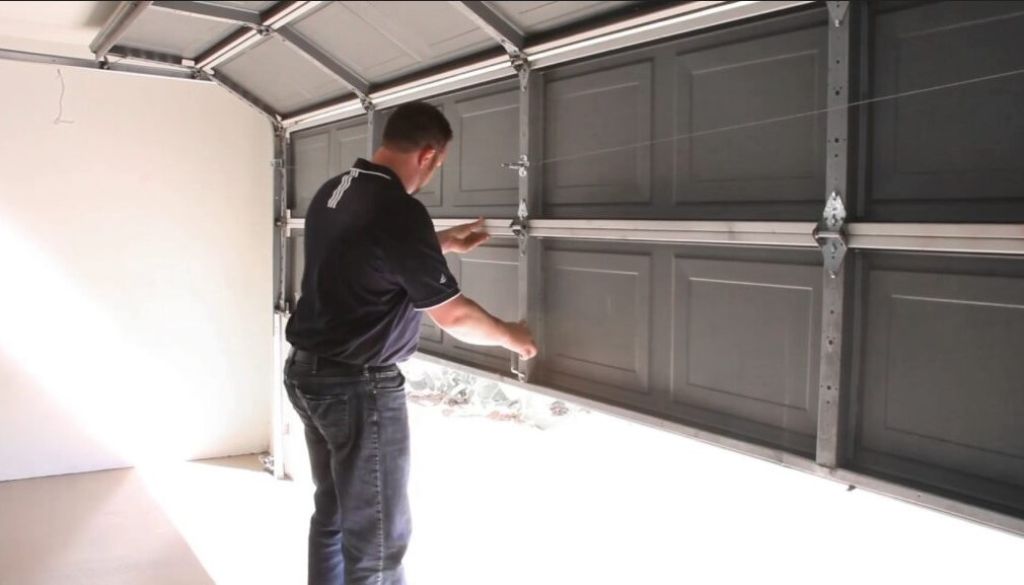
How to Test Your Garage Door Balance
Run this test with the area clear of people, pets and vehicles. Stop immediately if anything feels wrong.
Step 1: Close the garage door. Start from fully closed, on level ground, with good light. Make sure nothing is under the door path.
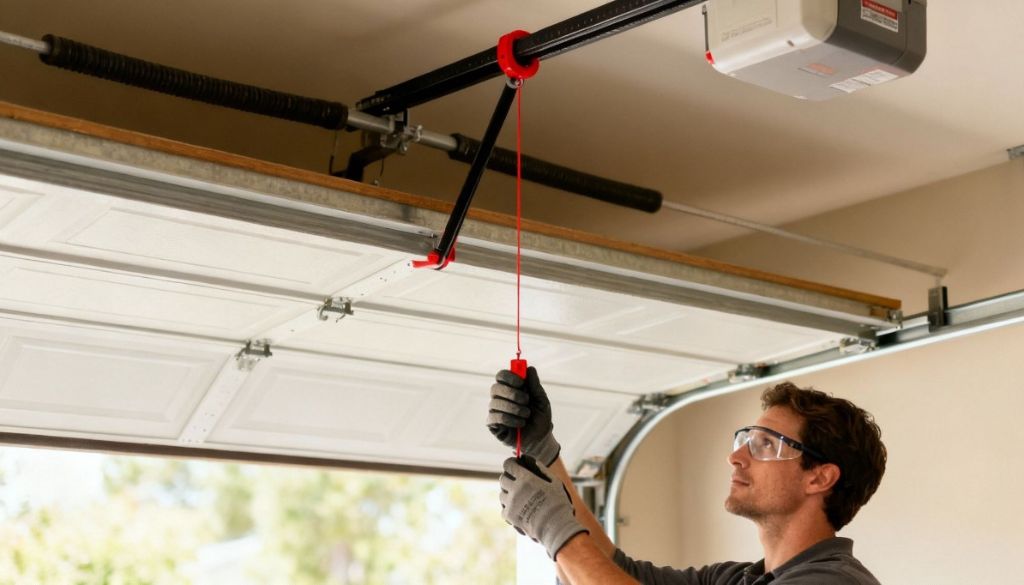
Step 2: Disconnect the automatic opener. Pull the emergency release cord — usually a red handle hanging from the opener rail — with the door closed. Releasing it with the door partly open can let the door fall. Check your opener manual if you’re unsure.
Step 3: Lift the door manually. Raise it slowly and steadily, using your legs rather than your back. Note how much effort it takes and whether resistance changes through the travel. If it won’t budge or feels dangerously heavy, lower it and stop.
Step 4: Observe the door at mid-height. Raise the door to roughly waist height and let go. A properly balanced door holds position with only slight drift. If it drops fast, rises on its own, or slides steadily in either direction, the counterbalance is out.
Step 5: Reconnect the opener. Follow the manufacturer’s instructions to re-engage the trolley, then run a full cycle and watch it. If the door still behaves oddly, stop using it and book an inspection.
What Causes a Garage Door to Become Unbalanced?
Worn or broken springs. Springs are rated in cycles and lose tension as they age. Coastal humidity accelerates corrosion, which shortens that life further. Spring work is professional-only — always.
Worn rollers and hinges. Seized bearings and worn pins add friction the springs weren’t sized for. The door feels heavy even though the springs are fine.
Damaged or misaligned tracks. A bent or shifted track binds the rollers. This is resistance, not a true balance fault, but it presents identically during a manual lift.
Door weight or component changes. New panels, added insulation, a replacement door or a repainted surface all change the weight the springs were calibrated for. Any of these needs the counterbalance re-set to match.
What Should You Do If Your Garage Door Is Unbalanced?
Safe Maintenance You Can Perform
Keep tracks clear of debris. Inspect rollers, hinges and brackets for visible wear, rust or looseness. Lubricate moving parts with a silicone or lithium-based product — never WD-40. Monitor changes in sound and movement over time. Our garage door DIY repair guide covers the full list of homeowner-safe tasks, and the troubleshooting walkthrough helps narrow down symptoms before you call.
When to Call a Garage Door Professional
Call for broken, gapped or visibly rusted springs; frayed or slack cables; significant track damage; a door that drops, slams or won’t hold position; and any door that has become noticeably heavy to lift.
Why You Shouldn’t Adjust Garage Door Springs Yourself
A wound torsion spring stores an enormous amount of energy in a small space. Released without the correct winding bars and technique, it releases all of it at once. Spring adjustment causes serious injuries every year, and the tools and training exist for a reason. Leave it to a technician.
How Garage Door Balance Affects Your Opener
Most residential openers are built for a service life of roughly 10 to 15 years. That figure assumes the motor is assisting a balanced door, not lifting an unbalanced one. Chronic overwork can cut that lifespan dramatically — gears strip, capacitors fail, and thermal cut-outs trip more often.
Correcting balance usually resolves performance complaints without any opener work at all: slow travel evens out, noise drops, and mid-cycle stops stop happening. If you’re weighing up a replacement unit, it’s worth checking balance first — and our garage door opener comparison is a useful reference once you know the door itself is sound.
Garage Door Balance vs Alignment: What’s the Difference?
Balance is about weight — whether the springs are offsetting the door’s mass. Alignment is about geometry — whether the tracks, rollers and door sit square and true. A balance fault makes the door heavy; an alignment fault makes it bind, scrape or catch. The manual lift test separates them: a door that’s heavy through the whole travel is a spring problem, while one that moves freely until a specific point is usually a track or roller problem.
Garage Door Balance Maintenance Checklist
| Frequency | Task |
|---|---|
| Monthly | Visual check for damage, rust and loose hardware; listen for new noises |
| Every 3–6 months | Lubricate rollers, hinges and bearings; clear tracks |
| Every 6 months | Run the manual balance test above; test auto-reverse |
| Annually | Professional inspection of springs, cables, rollers, tracks and opener |
Symptom, Cause and Action
| Symptom | Likely Cause | Recommended Action |
|---|---|---|
| Door feels very heavy | Spring or counterbalance fault | Professional inspection |
| Door rises or falls on its own | Counterbalance out of adjustment | Stop using; arrange service |
| Door moves unevenly | Tracks, rollers or balance | Inspect and service |
| Opener strains or stalls | Excessive resistance at the door | Check balance before replacing opener |
| Grinding or squeaking | Worn or dry components | Lubricate; assess if persistent |
Frequently Asked Questions
How do I know if my garage door is properly balanced?
Disconnect the opener, lift the door to waist height and let go. A balanced door holds position with minimal drift and lifts with light, even effort.
How do you test the balance of a garage door?
Close the door, release the opener using the emergency cord, lift by hand, observe the door at mid-height, then reconnect the opener and run a full cycle.
Should a garage door stay open halfway?
Yes. A small amount of drift is normal, but a door that drops or rises noticeably has a counterbalance problem.
Why is my garage door so heavy to lift?
Almost always weakened or broken springs, though worn rollers and damaged tracks can add enough resistance to feel similar.
Can an unbalanced garage door damage the opener?
Yes. The motor compensates for whatever the springs don’t support, which causes overheating, gear wear and early failure.
Get Your Garage Door Balance Checked on the Gold Coast
If your door feels heavy, drops when you let go, or your opener has started to labour, don’t wait for the spring to let go entirely. A1 Garage Doors Gold Coast has been servicing residential and commercial doors across the Gold Coast and into Brisbane since 2020, with a 4.9-star customer rating and technicians equipped for spring, cable, roller, track and opener work.
We’ll test the balance, identify whether the fault sits with the counterbalance or elsewhere in the system, and get the door running the way it should.
Call A1 Garage Doors Gold Coast on (07) 5515 0277 to book a garage door balance inspection.
