
Garage Door Motor Runs but Door Won’t Open: Causes & Fixes
You press the button on your remote. The opener hums to life. The motor runs — but the door doesn’t budge. It’s one of the more frustrating garage door faults a homeowner can face, especially if your car is stuck inside. Before assuming the opener itself is the problem, it’s worth ruling out a mechanical restriction in the track system — a blocked or misaligned track is one of the most common reasons a motor runs without moving the door, and our step-by-step track repair guide walks you through exactly what to inspect.
The good news: this is a well-understood problem with a clear list of causes. Some are simple enough to fix yourself in under five minutes. Others — particularly anything involving springs or cables — require a licensed technician to handle safely. This guide walks you through both.
Why Your Garage Door Motor Runs but the Door Doesn’t Move
Your garage door opener system has two distinct parts: the motor unit and the door mechanism itself. The motor’s only job is to drive the trolley carriage along the rail — the door only moves when that carriage is physically connected to the door bracket. When there’s a break anywhere in that chain of motion, the motor can run perfectly well while the door sits completely still.
This means diagnosing the fault requires looking at both the opener and the mechanical door components — springs, cables, tracks, and the drive system.
How Garage Door Openers Work
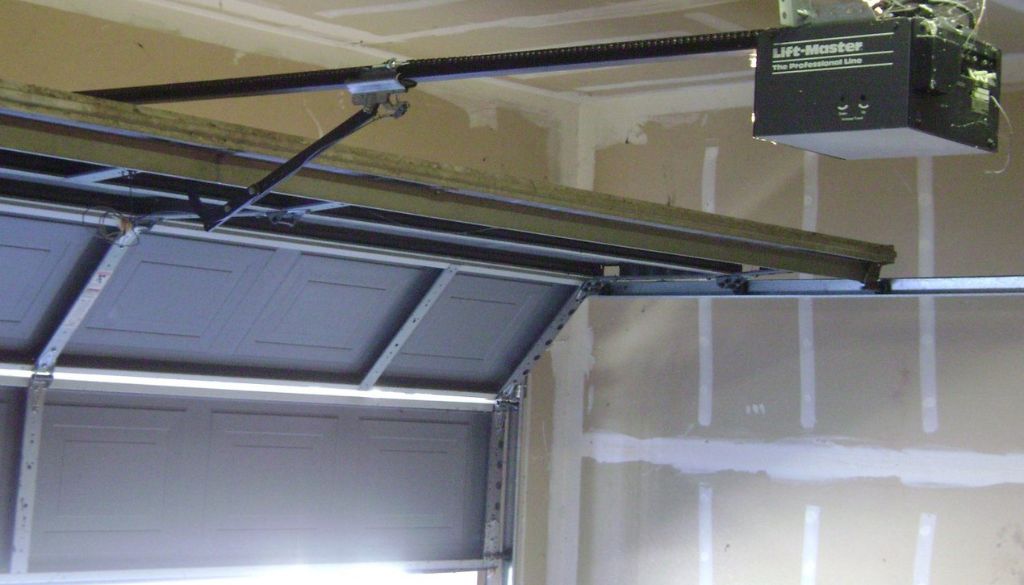
A garage door opener connects to the door via a drive system — chain, belt, or screw — that runs along a rail mounted to the ceiling. A trolley carriage rides this rail and attaches to a curved door arm bolted to the top section of the door. When the motor activates, it moves the trolley, which pushes or pulls the door along its tracks.
Springs do the heavy lifting. Torsion springs sit along a bar above the door; extension springs run along the side tracks. They store mechanical energy to counterbalance the weight of the door, making it light enough for the opener motor to handle. Without functioning springs, a standard door can weigh 40–80 kg — far more than any opener is rated to move on its own.
Most Common Reasons the Motor Runs but the Door Won’t Open
Use the table below to quickly match what you’re seeing to the likely cause:
| Cause | Symptom | DIY Fix? |
|---|---|---|
| Disengaged release cord | Motor runs, door stays still | Yes — re-engage cord |
| Broken torsion/extension spring | Loud bang; door heavy to lift | No — call a professional |
| Snapped or loose chain/belt | Motor hums, drive hangs loose | Partial — inspect only |
| Stripped internal gears | Grinding noise, no movement | No — opener repair needed |
| Frayed or snapped cables | Uneven movement or door drops | No — professional repair |
| Obstructed tracks or bent rollers | Scraping, stuttering movement | Yes — clear and inspect |
1. Disengaged Manual Release Cord
Every garage door opener includes an emergency release — a red handle hanging from the trolley. Pulling it disconnects the trolley from the drive system so the door can be operated manually during a power outage or mechanical fault.
If this cord has been pulled — intentionally or accidentally — the motor will run freely but the trolley won’t push or pull the door. This is the first thing to check, and it’s the easiest to fix.
How to fix it: Move the door manually to the fully open or closed position, then pull the release cord toward the motor unit (not straight down). Walk the trolley along the rail until it clicks back onto the drive carriage. Test your remote.
2. Broken Garage Door Springs
When a spring breaks, you usually hear it — a sharp bang, sometimes loud enough to sound like a gunshot inside the garage. After the break, the door becomes extremely heavy and the opener motor simply cannot lift it.
Visual check: look above the door for the torsion spring bar. A broken torsion spring will have a clear gap in the coil. Extension springs run along the upper sides of the tracks — a broken one will be hanging loose or missing entirely.
Important: Do not attempt to manually lift the door or operate the opener if you suspect a spring is broken. Springs are under extreme tension and can cause serious injury if mishandled. This is a job for the team at A1 Garage Doors Gold Coast.
3. Slipping or Broken Chain/Belt Drive
The chain or belt connecting the motor to the trolley carriage can stretch, snap, or come off its sprocket. When this happens, the motor turns but nothing moves along the rail.
A hanging or coiled chain lying on the rail, or a belt that’s visibly split or slack, is a clear indicator. Minor chain sag (more than 1–2 cm below the rail) can sometimes be tightened; a fully snapped drive requires professional service or opener replacement.
4. Stripped Gears Inside the Opener
Inside the opener head sits a plastic drive gear that transfers motor power to the rail. These gears are deliberately made softer than the motor components — they’re designed to fail first to protect the motor. Over time, or after a mechanical overload event, these teeth strip and the motor spins without turning the drive.
Signs: a grinding or whirring sound from the motor unit, a faint burning-plastic smell, and zero trolley movement. Gear replacement kits are available for most major brands (B&D, Merlin, Chamberlain), but the work requires disassembly of the opener head — best handled by a technician.
5. Broken or Loose Lift Cables
Steel lift cables run from the bottom bracket of the door up to a drum at each end of the torsion spring bar. They help control the door’s descent and assist with lifting. A frayed or snapped cable causes uneven movement — one side of the door drops while the other holds, or the door refuses to lift at all.
If you see a cable lying coiled on the floor or one side of the door dropping lower than the other, do not operate the opener. Cable repair involves working with spring tension and is strictly a professional task.
Step-by-Step Troubleshooting for a Garage Door That Won’t Open
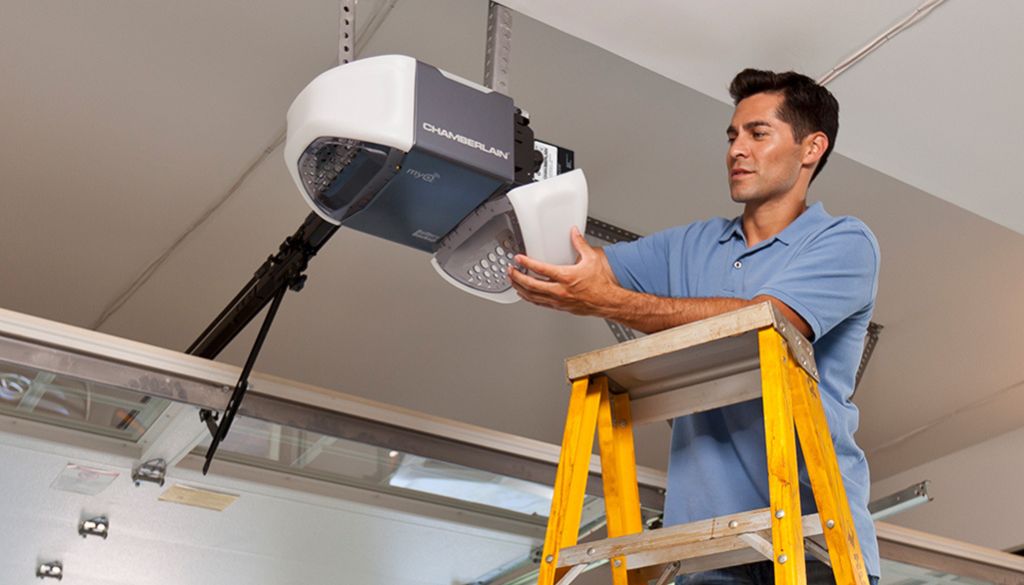
Work through these checks in order. Stop immediately if you find evidence of broken springs or cables.
Step 1 — Check the Manual Release Mechanism
Locate the red emergency release cord hanging from the trolley carriage on the rail. If it’s been pulled, the door will be in manual mode. Re-engage it (pull toward the motor, then slide the trolley back into the drive slot) and test your remote.
Step 2 — Inspect the Garage Door Springs
From a safe distance, look at the torsion spring bar directly above the door. Look for any visible gap or separation in the coil. Then check the extension springs along the upper side tracks. Do not touch them. If you find a broken spring, stop and call a professional.
Step 3 — Examine the Chain or Belt Drive
With the opener unplugged, look at the drive system. Is the chain hanging low, coiled on the floor, or clearly separated? Is the belt split or slack? Check where the drive connects to the trolley and the sprocket at the motor end.
Step 4 — Check Tracks, Rollers, and Obstructions
Look along both vertical and horizontal tracks for dents, bends, or debris. Even a small rock or piece of trim caught in the track can prevent movement. Rollers should sit squarely in the track — worn or cracked rollers will stick. Clear any obstructions and check that the track bolts are tight.
Step 5 — Reset the Garage Door Opener
If the mechanical components look fine, unplug the opener from the power outlet, wait 30 seconds, then plug it back in. This clears any electronic fault or tripped internal breaker. Test the door from both the remote and the wall button. If the motor runs but the door still doesn’t move, the issue is mechanical and needs professional attention.
When You Should Call a Professional Garage Door Technician
Some garage door problems are genuinely DIY-friendly. Others carry real injury risk. The table below draws a clear line:
| Safe to DIY | Call a Professional |
|---|---|
| Re-engage manual release cord | Broken torsion or extension springs |
| Clear track obstructions | Snapped lift cables |
| Power-cycle the opener | Off-track or bent track |
| Inspect chain/belt visually | Stripped opener gears or motor failure |
| Lubricate rollers and hinges | Any work near springs under tension |
Broken Springs
Torsion and extension springs store enough energy to cause severe injury if released uncontrolled. Spring replacement requires specialised winding tools and must be performed by a qualified technician. Never attempt to remove, adjust, or replace a garage door spring yourself.
Cable or Track Damage
A snapped cable or an off-track door can result in the door collapsing. If either side of the door is sagging, the tracks are visibly bent, or a cable has come free, keep everyone away from the door and call for service immediately.
Opener Gear or Motor Failure
If the opener itself has failed — stripped gears, a burnt motor, or damaged circuit boards — you’ll need a repair or replacement assessment. A technician can advise whether a gear kit is the right fix or whether the unit is past the point of cost-effective repair. Our garage door opener comparison and buying guide breaks down the top options available on the Gold Coast.
Need help today? Call A1 Garage Doors Gold Coast
If your inspection reveals a broken spring, snapped cable, or stripped gear — don’t delay. A1 Garage Doors Gold Coast has been serving homeowners across the Gold Coast since 2020, with a 4.9-star rating and same-day service available. Call us on (07) 5515 0277 or book a repair online. We cover all Gold Coast suburbs and parts of Brisbane.
Preventing Garage Door Opener Problems
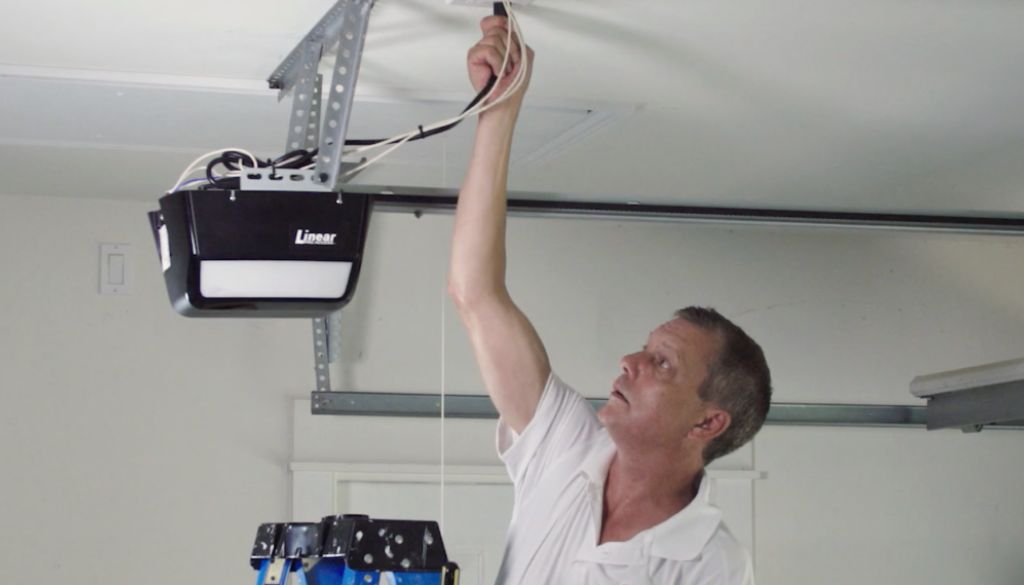
Routine Maintenance Tips
* Lubricate all moving parts every 6 months — use a silicone spray on rollers, hinges, springs, and the drive chain or belt. Avoid WD-40, which attracts dust.
* Inspect cables and rollers for wear every 3 months. Fraying cables should be replaced before they snap.
* Test door balance monthly: disconnect the opener, lift the door manually to waist height, and let go. A balanced door should hold; one that drops or shoots up has a spring issue.
* Check and clear the photo-eye safety sensors at the base of the door tracks — dirty or misaligned sensors can prevent the door from operating.
Schedule Professional Inspections
An annual service by a qualified technician can catch spring fatigue, cable wear, and gear degradation before they become emergencies. A1 Garage Doors Gold Coast offers inspections across all Gold Coast suburbs — see our complete garage door troubleshooting guide for more on what a full service covers, or check our emergency garage door repair Gold Coast page if you need urgent help right now.
Frequently Asked Questions
Why does my garage door opener run but not lift the door?
The most common reasons are a disengaged manual release cord, broken springs, a stripped gear inside the opener, or a snapped chain or belt drive. Inspect the emergency release cord first — it’s the quickest and easiest fix to rule out.
How do I reconnect my garage door opener after pulling the release cord?
Move the door manually to the fully open position, then pull the release cord toward the motor unit (not straight down). Slide the trolley carriage back along the rail until you hear it click into the drive. Test your remote to confirm re-engagement.
Can a broken spring cause the motor to run without opening the door?
Yes — this is one of the most common causes. When a spring breaks, the door weight is no longer counterbalanced, making it too heavy for the motor. The opener runs but cannot overcome the load. Broken springs must be replaced by a professional.
How do I know if my garage door opener gears are stripped?
The tell-tale signs are a grinding or whirring sound when the motor runs, a faint burning smell (hot plastic), and complete absence of trolley movement. If you notice these signs, unplug the opener and call a technician for an assessment.
Should I replace or repair my garage door opener?
If the opener is under 10 years old and only the gears are stripped, a repair kit is usually cost-effective. For units older than 10–12 years with multiple issues, full replacement often makes better financial sense. Our garage door opener comparison and buying guide covers the leading models available in Australia.
