
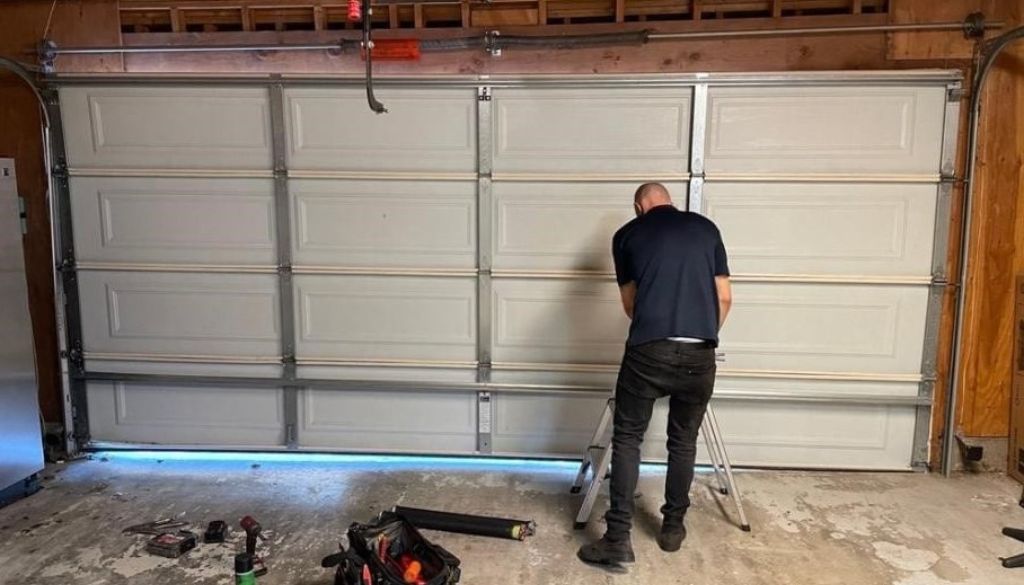
Most Gold Coast homeowners only think about their garage door when it stops working. By then, a worn roller or a fraying cable has usually caused damage that a routine inspection would have caught months earlier.
As a general rule, a residential garage door should be professionally serviced at least once every 12 months. That interval is a starting point, not a fixed rule. How often your door actually needs attention depends on how much you use it, how old it is, what type of door you own, and where your home sits in relation to the coast.
This guide explains how to work out the right servicing schedule for your door, what a professional service should cover, and which warning signs mean you shouldn’t wait for the next scheduled visit.
How Often Should a Garage Door Be Serviced?
An annual professional service suits most Gold Coast homes with a standard residential door and average daily use. Some doors need attention more often.
Routine professional servicing is different from the simple checks you can do yourself. A homeowner can look and listen for problems. A technician can measure door balance, test spring tension, adjust travel limits and replace worn hardware safely.
Garage Doors Used Every Day
If your garage door is the main entry to your home, it may open and close six to eight times a day. That adds up to thousands of cycles a year.
Every cycle puts load on springs, cables, rollers and hinges. Doors used this heavily benefit from an inspection every six to nine months. If you notice new noise or changed movement between services, book earlier rather than waiting.
Older Garage Doors
Wear accumulates gradually. Springs lose tension, cable strands fray, roller bearings dry out and opener gears wear down — often without any obvious symptom until something fails.
Doors older than ten years generally warrant more frequent inspection. Regular servicing also gives you a clear picture of whether continued repairs still make sense, or whether replacement is the better long-term option.
Doors in Coastal Gold Coast Areas
Homes in Mermaid Beach, Palm Beach, Main Beach, Currumbin and similar coastal suburbs face constant salt-laden air and high humidity. Salt accelerates corrosion on exposed metal, and a garage door is largely made of exposed metal.
If you live within a few kilometres of the beach, consider shortening your professional service interval and increasing how often you visually inspect the hardware.
Why Regular Garage Door Servicing Matters
Prevent Unexpected Breakdowns
A routine inspection identifies components showing early wear so they can be replaced on your schedule instead of failing at the worst possible moment. A door that jams shut with your car inside is more than an inconvenience — it usually becomes an urgent callout. Our guide to what to do when your garage door fails unexpectedly covers how to handle those situations safely.
Extend the Life of Components
Springs, cables, rollers, hinges and tracks all wear at different rates. Correct lubrication, proper alignment and balanced tension reduce friction across the whole system, which slows that wear considerably.
Protect the Garage Door Opener
Your opener is designed to guide a properly balanced door, not to lift its full weight. When springs weaken or rollers bind, the motor compensates by working harder. That strain shortens motor life and is one of the most common reasons openers fail early.
Servicing the door and the opener together makes sense, because the condition of one directly affects the other. If your motor is nearing the end of its life, our comparison of garage door opener models explains what suits different door types and Gold Coast conditions.
Maintain Safe Operation
Automatic doors rely on safety sensors and an auto-reverse function to stop the door closing on a person, pet or vehicle. These systems can drift out of alignment or fail without warning. Have them checked at every service, and call a technician immediately if the door doesn’t reverse when it should.
What Does a Garage Door Service Include?
A professional service should cover the complete system, not just the parts that are easy to reach.
| Component | What the technician checks |
|---|---|
| Springs | Tension, visible wear, corrosion, cycle life |
| Cables | Fraying, rust, correct seating on drums |
| Tracks | Alignment, damage, debris, fixings |
| Rollers & hinges | Wear, play, smooth movement |
| Door balance | Whether the door holds position when disconnected |
| Opener | Force settings, travel limits, unusual noise |
| Safety sensors | Alignment and auto-reverse function |
| Hardware | Loose fasteners, brackets, weather seals |
| Lubrication | Correct product applied to the right points only |
Lubrication matters more than most homeowners expect. Applying the wrong product, or applying it to the tracks, attracts grit and accelerates wear. Follow the manufacturer’s recommendations rather than reaching for a general-purpose spray.
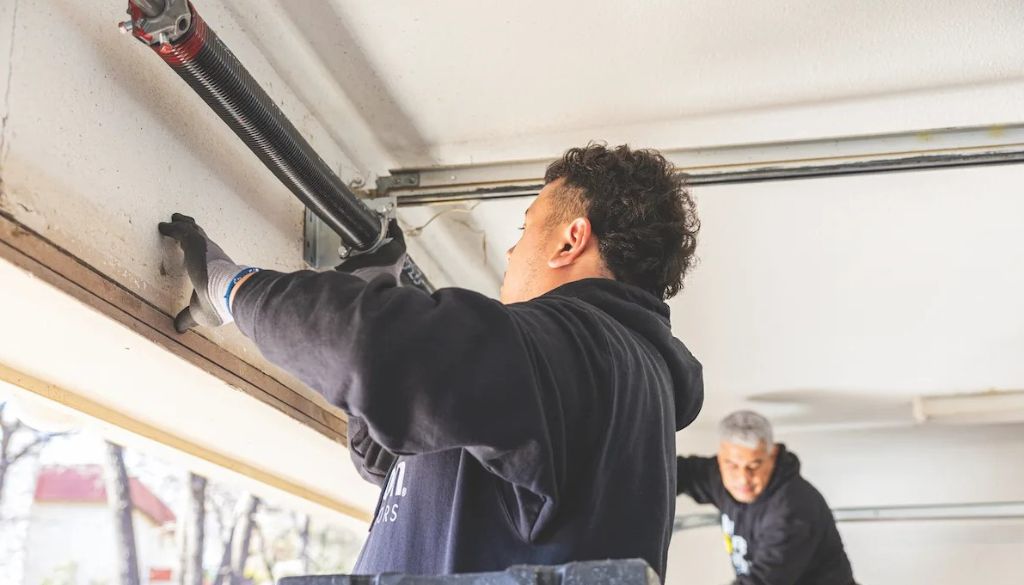
Signs Your Garage Door Needs Servicing Now
Don’t wait for the next scheduled visit if you notice any of the following:
- New or increasing noise. Grinding, rattling, squealing or straining sounds usually indicate worn rollers, dry bearings or a spring problem.
- Slow or hesitant operation. A door that has become sluggish is telling you something in the system is creating resistance.
- Uneven or heavy movement. If the door sits crooked or feels unusually heavy, spring or cable balance is likely the cause.
- The opener hums, stops or struggles. Recurring faults point to either a motor problem or excessive load from the door itself.
- Visible rust or damage. Corrosion on springs, tracks, cables or brackets needs professional assessment before it affects structural components.
Some of these symptoms have simple explanations. Our common garage door problems and fixes guide helps you tell the difference between a minor adjustment and a job for a technician.
One important warning: never attempt to adjust or replace torsion or extension springs yourself. They hold enough stored energy to cause serious injury. The same applies to cables under load.
Gold Coast Maintenance: Salt Air, Humidity and Corrosion
Coastal exposure is the single biggest reason a Gold Coast servicing schedule shouldn’t be copied from a generic guide.
Airborne salt settles on springs, tracks, fasteners and brackets, then combines with humidity to accelerate rust. Corrosion on a spring or cable is a structural concern, not a cosmetic one, because it reduces the load the component can safely carry.
Material choice affects how well a door handles this environment. Steel doors need consistent attention to protective coatings, while alternatives such as composite garage doors resist salt and moisture better on the panels themselves — though the springs, cables and opener still require the same routine servicing.
If your home is close to the water, rinse the door face with fresh water periodically and inspect exposed hardware monthly.
Homeowner Maintenance Checklist
| Task | Suggested frequency |
|---|---|
| Visual check for rust, damage or loose parts | Monthly |
| Listen for changes in noise during operation | Monthly |
| Watch for uneven or hesitant movement | Monthly |
| Test the auto-reverse safety function | Per manufacturer guidance |
| Professional service | Annually, or more often with heavy use or coastal exposure |
| Keep records of services and repairs | Ongoing |
Servicing by Door Type
Sectional doors have more moving parts — multiple hinges, rollers and track sections — so alignment and roller wear deserve close attention.
Roller doors rely on curtain tension and smooth travel into the drum. Changes in noise or resistance are the main early warning signs.
Automatic doors need both the mechanical door and the drive system checked. Slow response, intermittent operation or remote faults often trace back to the motor unit, and our overview of garage door opener motor options in Australia explains how different drive types age.
When Replacement Makes More Sense Than Servicing
Servicing extends the life of a door, but it can’t reverse everything. Consider replacement when:
- The door is well past its expected service life and repairs are becoming frequent
- Multiple systems are failing — springs, opener and hardware within a short period
- Panels or structural components are significantly damaged
- Corrosion has affected structural elements rather than surface finishes
Age alone doesn’t mean replacement. A well-maintained twenty-year-old door in good condition may still have years left. A professional assessment gives you the honest comparison.
Book a Garage Door Service on the Gold Coast
A1 Garage Doors Gold Coast has serviced residential and commercial doors across the Gold Coast since 2020, with a 4.9-star review rating from local homeowners. Our technicians inspect the full system — springs, cables, tracks, rollers, balance, opener and safety sensors — and give you a clear picture of what needs attention now and what can wait.
If your door is due for a service, or something has changed in how it sounds or moves, call (07) 5515 0277 to arrange an inspection.
Frequently Asked Questions
How often should a garage door be serviced?
At least once every 12 months for a typical residential door. Heavily used doors, older doors and doors in coastal suburbs often benefit from servicing every six to nine months.
Is annual garage door servicing necessary?
Yes. Springs, cables and rollers wear continuously, and annual inspection catches that wear before it causes a failure or a safety issue.
How much does a garage door service cost on the Gold Coast?
Cost depends on your door type, its condition and whether any parts need replacing. Contact A1 Garage Doors Gold Coast on (07) 5515 0277 for a quote based on your specific door.
What is included in a garage door service?
Inspection of springs, cables, tracks, rollers, hinges and hardware; a door balance test; opener and safety sensor checks; and correct lubrication of moving parts.
How often should garage door springs be checked?
At every professional service. Springs carry the door’s weight and are the most safety-critical component in the system.
Does coastal weather affect garage door maintenance?
Significantly. Salt air and humidity accelerate corrosion on springs, tracks and fasteners, so homes near the beach generally need more frequent inspection.
