
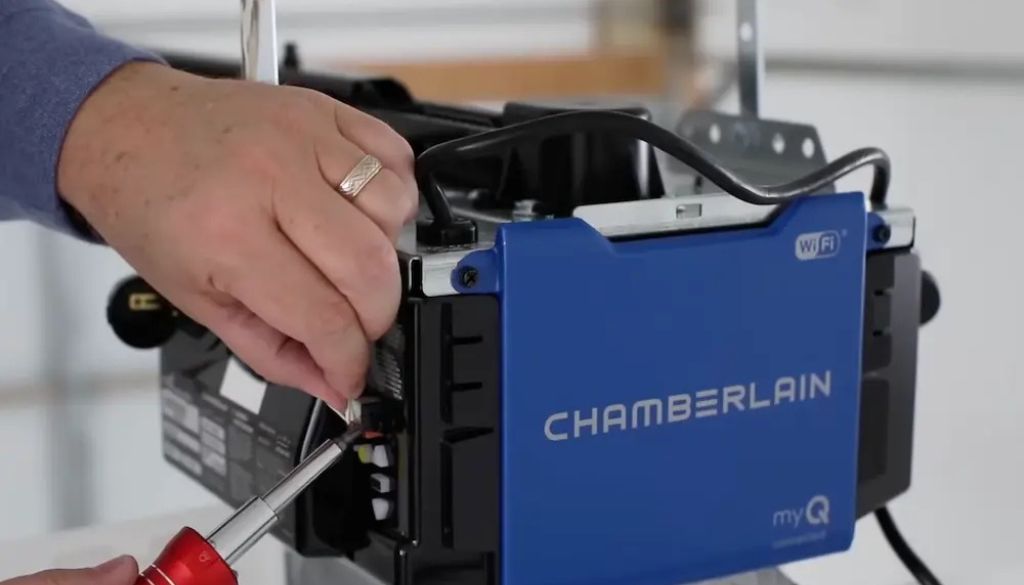
This guide covers the most common opener failures Gold Coast homeowners encounter, the factors that tip the decision toward repair or replacement, and when to call in a professional rather than reaching for a YouTube tutorial.
A garage door that shakes, jerks, or vibrates when it opens isn’t just annoying – it’s your door telling you something is wrong. The question most Gold Coast homeowners ask is simple: do I need to worry about this? If you’re considering a new garage door, understanding the differences betweenWhy Garage Door Openers Failroller door vs panel lift
systems can help you choose an option that operates more smoothly and minimizes excessive shaking.Most openers are workhorses — they cycle up and down thousands of times over their lifespan without much attention. But that repetitive mechanical stress, combined with Queensland’s humidity and heat, does take a toll.
The short answer is yes, you should take it seriously. While minor vibrations aren’t always an immediate emergency, persistent shaking is a warning sign that components are wearing down, and left unaddressed, a shaking garage door can become genuinely dangerous.Mechanical failures are the most common culprits. Plastic drive gears wear down over time, especially in chain and screw-drive units. Drive belts crack and snap. Springs — the separate torsion or In this guide, we’ll break down exactly why your garage door shakes when opening, help you assess the risk level, walk you through what you can safely check yourself, and explain when it’s time to call the professionals at A1 Garage Doors Gold Coast.extension springs that do the actual heavy lifting — can break suddenly, leaving the opener motor struggling against a door it can no longer move.<
span data-mce-type="bookmark" style="display: inline-block; width: 0px; overflow: hidden; line-height: 0;" class="mce_SELRES_start">
Factors to Consider Before Repairing Your OpenerThis is one of the easiest issues to spot: check the hinges along each panel and the bolts on the track brackets. If any feel loose to the hand, this is likely contributing to your problem.
Age of the Opener2. Dirty or Stiff Rollers
Garage door openers are generally designed to last 10–15 years with reasonable maintenance. If yours is already in that range, spending significant money on a repair is often a poor investment — you may fix one problem only to face another in six months. On a newer unit (under seven or eight years), the same repair becomes far more justifiable.The rollers are the small wheels that guide your door along the tracks. On the Gold Coast, salt air, dust, and humidity accelerate the buildup of grime inside the tracks and on the rollers themselves. When rollers can’t roll freely, they slide and skip instead – creating vibration and jerky movement.
The 50% RulePlastic rollers (common on older doors) wear out faster than nylon or steel variants. Nylon rollers are the preferred choice for smooth, quiet operation and are more resistant to the coastal environment.
A widely used rule in the repair industry: if the cost of repairing a component exceeds 50% of the cost of a new unit, replacement is almost always the smarter financial decision. New openers with modern features — quieter belt drives, smartphone connectivity, battery backup — can be installed for a reasonable cost, and they come with a warranty. Throwing significant money at an ageing unit rarely pays off.3. Track Misalignment or Obstructions
Repair HistoryThe tracks on either side of your door need to be perfectly aligned for smooth operation. A knock from a vehicle, an impact during a storm, or the gradual loosening of mounting brackets can cause tracks to shift out of position. Even a few millimetres of misalignment forces the rollers to bind and fight their way up the track – producing that jerking, shuddering movement.
Has this opener already had parts replaced in the last couple of years? Recurring failures on the same unit are a strong signal that the system as a whole is deteriorating. One repair might be coincidence; two or three in quick succession suggests you’re keeping an old unit on life support.Check your tracks visually: are they straight? Is there a visible gap between the roller and the track rail? Obstructions like small stones, debris, or built-up hardened grease can also cause the rollers to catch.
Safety Implications4. Garage Door Opener Problems
This one matters more than most homeowners realise. Older openers may not meet current Australian safety standards — particularly around auto-reverse mechanisms. If your unit predates Your modern safety sensorsopener motor or has electrical components that are genuinely degraded, operating it isn’t just inefficient, it’s potentially dangerous. and its drive system – whether chain, belt, or screw drive – can also be the source of shaking. Chain drive openers are particularly prone to vibration when the chain stretches or skips on the sprocket. A worn drive gear, a failing motor capacitor, or a door running at the wrong speed setting can all generate shuddering during operation.
Common Repairs Worth DoingIf the shaking seems to come from the ceiling-mounted motor unit rather than the door itself, the opener is likely the issue. See our
Garage Door Opener ComparisonSensor and Safety Switch Replacement guide to understand when a replacement makes more sense than a repair.
Safety sensors sit at the base of your door tracks and detect obstructions. They’re one of the most frequently replaced parts and also among the most affordable. Misalignment — often caused by a knock from a bin or garden equipment — is the most common issue. Cleaning the lenses or realigning the sensor brackets usually takes under 30 minutes and costs very little. Even 5. Balance or Installation Issuessensor replacement is a low-cost repair that restores full safe functionality. This is firmly in “worth repairing” territory.A properly balanced garage door should hold its position when disconnected from the opener and raised to the halfway point. If it drops or rises on its own, the spring tension is off – meaning the opener is compensating for uneven weight distribution on every single cycle. This creates uneven, jerky movement and dramatically increases wear on every other component.
Remote and Circuit Board Repairs
Is a Shaking Garage Door Dangerous?Before assuming your circuit board is dead, always check the basics: batteries in the remote, a blown fuse in the unit, or the wall button as an alternative. If the wall button works but the remote doesn’t, the issue is almost certainly the remote or receiver, not the board itself. Circuit board replacement — when the motor is otherwise running well — is often cost-effective, particularly on a unit under eight years old. A new board costs considerably less than a new opener and extends the unit’s useful life.
This is the core question, and the honest answer is: it depends on the cause and severity – but the risks are real.Motor or Drive Component Repairs
Increased Wear on All ComponentsBelt and chain drives wear out with use, and replacing these drive components at moderate cost is generally worthwhile if the motor itself is functioning efficiently. The key qualifier is the motor — if a technician assesses the motor as still sound, repairing the drive mechanism makes sense. If the motor is on its way out as well, you’re better off replacing the whole unit and getting a fresh warranty.
Vibration is a stress multiplier. A door that shakes on every cycle is accelerating wear on rollers, tracks, hinges, springs, and cables simultaneously. What starts as a minor shimmy can evolve into a complete component failure within months.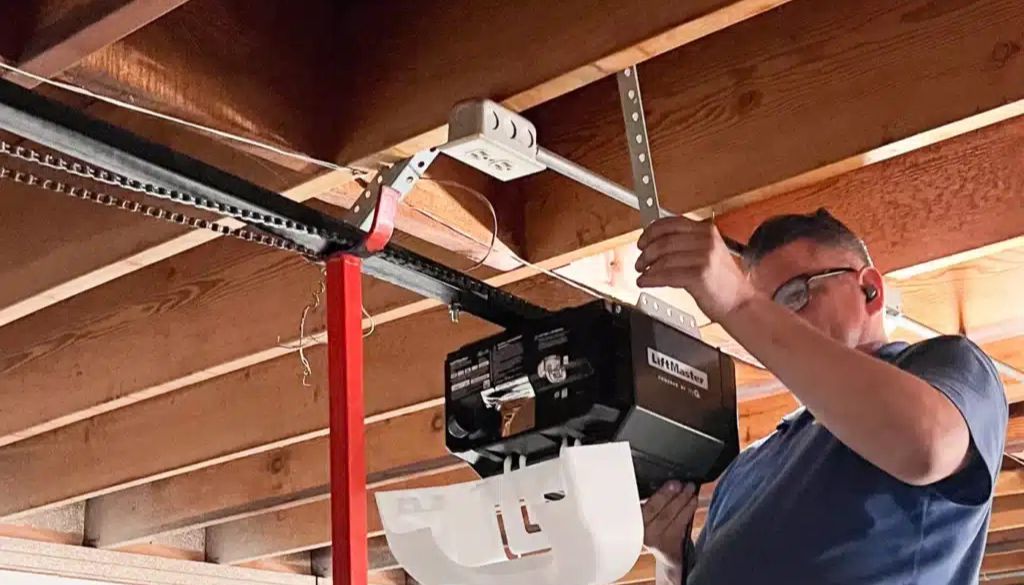
When Replacement Is the Better OptionRisk of Door Misalignment
There are clear scenarios where repair is the wrong call:Persistent shaking can knock tracks further out of alignment, creating a self-reinforcing problem. A misaligned door may start binding mid-cycle, close unevenly, or fail to seal at the bottom – creating security gaps and weather exposure.
The opener is 10–15+ years old.Potential Safety Hazards At this age, parts are harder to source, the motor efficiency has declined, and safety features are likely outdated. Replacement delivers better value.
This is where a shaking garage door becomes genuinely dangerous.Multiple components have failed. If the board, the drive, and the motor are all showing issues simultaneously, you’re not dealing with an isolated problem — the whole system is worn out.Torsion springs and cables
are under enormous tension. If a spring fails suddenly because vibration has accelerated metal fatigue, it can snap violently. A door with failing springs or frayed cables can drop without warning. This is not a hypothetical risk – it’s the reason spring and cable issues should always be assessed by a licensed technician. For more detail on when to treat a garage door fault as an emergency, read our Emergency Garage Door Repair guide.It doesn’t meet current safety standards. Openers without compliant auto-reverse and sensor systems are a genuine hazard, particularly in households with children or pets.Quick Diagnosis: Symptom → Cause → Action
- Circuit board replacement:Lubricate; replace if worn $150–$300 depending on the unit model
- Drive belt or chain replacement: $150–$250 in parts and labourJerky movement throughout
- Motor replacement:Track misalignment $200–$400+ — at this point, a new opener becomes competitive Professional realignment
A new entry-level opener installed professionally typically starts from around $400–$600 for a basic unit, rising to $800–$1,200+ for premium belt-drive or smart-enabled models. If your repair quote is approaching the lower end of those replacement figures, replacement wins on value every time.
Safety ConsiderationsShaking from motor unit
Garage door systemsOpener chain/belt issue involve forces and components that can cause serious injury if handled incorrectly. Torsion springs operate under extreme tension — a snapped spring or incorrect adjustment can cause devastating injury and must only be handled by a licenced technician. The same applies to high-voltage motor components and complex electrical faults.
Opener service or replacementDIY repairs are genuinely appropriate for a narrow category of tasks: replacing batteries, cleaning sensor lenses, or tightening loose hardware. Beyond those basic tasks, professional service isn’t just recommended — it’s the responsible choice.
A qualified technician will also identify secondary issues you might miss when focusing on the obvious fault. A door that’s out of balance, for instance, puts enormous strain on the opener motor. Fixing the opener without addressing the balance problem means the same failure is coming back sooner than it should.
Door drops to one side
Tips to Extend the Life of Your Garage Door OpenerSpring imbalance
A little preventive care goes a long way toward avoiding the repair-or-replace question in the first place.Professional spring adjustment
Lubricate the moving parts twice a year — the drive chain or belt, the trolley carriage, and the rollers. Use a silicone-based lubricant rather than WD-40, which can attract dust and gum up components over time. This is also worth pairing with attention to broader door maintenance; our post on fixing garage door gaps for energy efficiency covers weatherseal care that reduces strain on the entire system.
Rattling during movementKeep sensors clean. Dust, cobwebs, and moisture build up on sensor lenses, causing intermittent faults that mimic serious electrical problems. A wipe-down every couple of months prevents unnecessary call-outs.Loose bolts/hinges
Check the door balance.Tighten hardware – DIY safe
Shaking + visible cable frayingDon’t ignore small issues. A grinding noise, a slight hesitation, or a remote that only works from three feet away are early warnings. Addressing them early — when repair costs are minimal — is almost always cheaper than waiting for a full failure. Our broader garage door troubleshooting resource can help you identify what those early signs mean.Failing cables
Consider the full system.Stop use; call technician immediately Opener lifespan is tied to the health of the door itself. A door with deteriorating insulation, misaligned tracks, or worn rollers works the opener harder. Maintaining the full system — not just the motor — keeps everything running longer. If you’ve been thinking about upgrades to the door itself, garage door insulation is one improvement that reduces thermal stress and makes the garage significantly more comfortable year-round.
FAQs
Can a single broken part be repaired without replacing the opener?
Signs the Problem Is Getting WorseYes — in many cases, absolutely. Sensors, remotes, circuit boards, and drive belts can all be replaced as individual components. Whether it makes financial sense depends on the age of the unit and the cost of the part relative to a new opener.
These warning signs indicate you’re past the “monitor it” stage and need to act promptly.How do I know if my opener is too old to repair?
Excessive Noise or RattlingIf it’s 10–15 years old, lacks modern safety sensors, or has needed multiple repairs in recent years, that’s a strong case for replacement. A technician can assess the motor condition and give you an honest recommendation.
A grinding, scraping, or loud rattling noise accompanying the shake points to metal-on-metal contact – components that are no longer moving freely. This is active damage occurring with every cycle.