
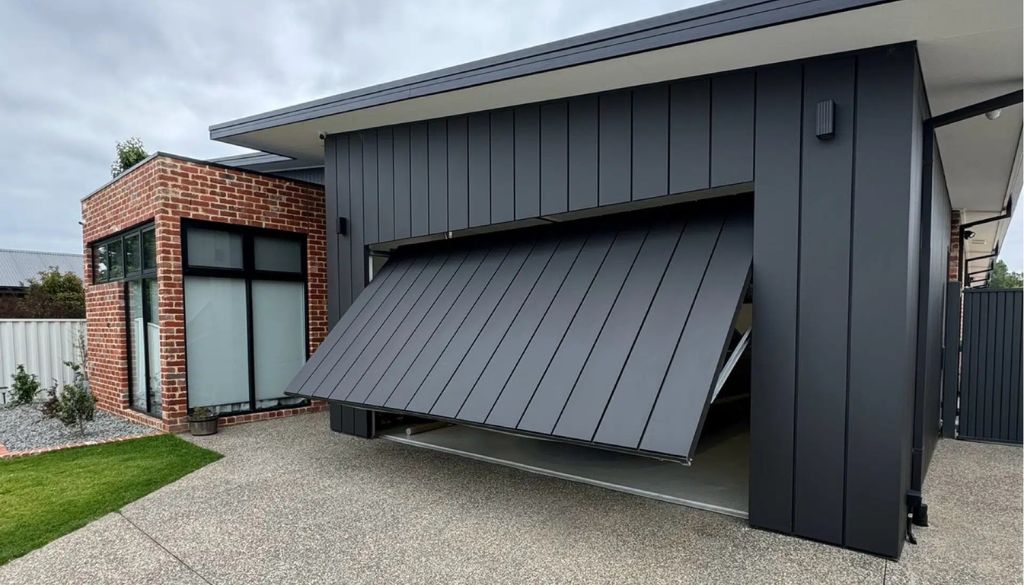
Tilt garage doors remain one of the most popular choices for Gold Coast homes, particularly in older properties and spaces where a traditional roller or sectional door simply won’t fit. Whether you’re upgrading an existing door or starting a new build, understanding the tilt door installation process helps you make confident decisions and get the best result from your investment. Because tilt doors operate on a single pivot mechanism rather than a sectional track system, any imbalance in the counterbalance setup can cause the door to drop sharply — see our post on why garage doors slam and how to fix it for a full breakdown of what to check.
At A1 Garage Doors Gold Coast, we’ve been installing, repairing, and servicing tilt doors across the Gold Coast and Brisbane regions since 2020. This guide covers everything you need to know — from how tilt doors work to choosing the right material, installation steps, and ongoing maintenance.
What Is a Tilt Garage Door?
A tilt garage door — sometimes called a one-piece or tilt-up door — is a single solid panel that pivots outward and upward as it opens. Unlike sectional doors with multiple folding panels, a tilt door operates as one unit, guided by pivot arms, a hinge cradle system, and counterbalance springs that manage the weight of the panel. Tilt doors have a different wind load profile compared to sectional and roller doors, so if you’re in a storm-prone area it pays to understand your options — our storm-proofing guide for Gold Coast homeowners covers door type comparisons and reinforcement strategies in detail.
The counterbalance spring system is the key to smooth operation. As the door lifts, the springs offset the weight of the panel, making it easy to open manually or with an automatic opener. This mechanism also reduces strain on hardware and extends the lifespan of the door.
Where Tilt Doors Work Best
Tilt doors are particularly well-suited to:
* Garages with limited headroom above the opening
* Older Gold Coast homes where roller door tracking isn’t possible
* Properties where side clearance is restricted
* Commercial car parks and warehouse openings
* Homeowners seeking a clean, flat facade with minimal visible hardware
Types of Tilt Garage Doors
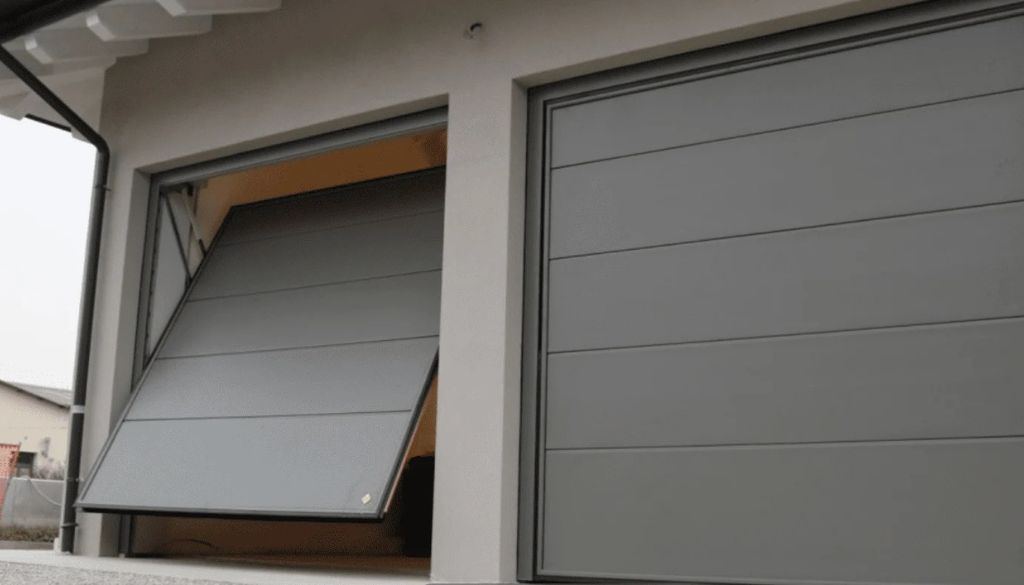
There are three main types of tilt garage doors, each suited to different garage configurations and homeowner priorities:
| Type | Key Feature | Ideal Situation |
|---|---|---|
| Tilt-Up Canopy | Trackless; door partially extends outside | Tight budgets, simple setups |
| Tilt-Up Retractable | Full ceiling retraction via track | Motorised/automated garages |
| Custom Tilt Door | Bespoke materials and facades | Heritage, prestige, or modern homes |
Tilt-Up Canopy Doors
The canopy tilt door is the most common and cost-effective option. It operates without a track system, meaning a section of the door extends outside the garage opening when raised. This design is simple to maintain and install, making it a reliable choice for standard residential garages.
Tilt-Up Retractable Doors
Retractable tilt doors use a horizontal track system to guide the panel fully inside the garage ceiling space when open. This design is fully compatible with automatic garage door openers and is the preferred choice when motorisation is a priority.
Custom Tilt Doors
For homeowners who want their garage door to be a design feature, custom tilt doors offer complete flexibility in materials, finishes, and facade cladding. Options include timber, steel, aluminium, and glass or acrylic panels — all available in Colorbond colours or bespoke finishes to match your home’s exterior.
Choosing the right installation approach is essential for long-term performance, which is why our experts offer reliable sloped garage door installation designed to suit unique garage layouts and provide smooth, safe operation.
Tilt Door Installation Process
Professional tilt door installation follows a structured process to ensure the door operates safely, balances correctly, and is built to last in the coastal Gold Coast environment.
Step 1: Garage Space Assessment
Before anything is ordered or fabricated, the installation team assesses your garage opening. This includes measuring the exact width and height of the opening, evaluating available headroom (typically a minimum of 150mm is required), checking side room clearance (around 100mm on each side), and confirming the clear swing space in front of the garage is unobstructed.
Step 2: Choosing the Right Tilt Door
Once the space is assessed, you’ll select your door type, material, colour, and any customisation options such as windows, pedestrian access doors, or facade-matching cladding. At A1 Garage Doors Gold Coast, our team guides you through these choices to ensure the final result suits both the function and aesthetics of your property.
Step 3: Professional Installation
Installation involves mounting the door frame and hardware, fitting the counterbalance spring system, attaching pivot arms and the hinge cradle, and — where applicable — installing the garage door motor and automation equipment. Spring installation in particular requires specialist knowledge and tools; incorrectly tensioned springs are a significant safety hazard.
Step 4: Testing and Adjustment
Once installed, every tilt door undergoes balance and alignment checks, motor calibration (if automated), and a full safety test. The door should travel smoothly through its full range of motion with no binding, resistance, or misalignment.
Tilt Door Materials and Design Options
The material you choose affects the door’s weight, maintenance requirements, and suitability for the Gold Coast’s coastal climate. Here’s how the most common options compare:
| Material | Durability | Maintenance | Best For |
|---|---|---|---|
| Timber | Moderate | Higher | Classic/Heritage homes |
| Steel | High | Low | Security-focused properties |
| Aluminium | High | Very Low | Coastal / modern homes |
| Glass/Acrylic | Moderate | Low | Contemporary / feature garages |
Aluminium is a particularly popular choice on the Gold Coast due to its natural resistance to salt air corrosion. Colorbond steel also performs well in coastal conditions and offers a wide range of colour options to complement your home’s facade.
Space Requirements for Tilt Door Installation
Getting the space right before installation is critical. The key clearance requirements for most tilt door installations are:
* Headroom: minimum ~150mm above the top of the door opening
* Side room: minimum ~100mm on each side of the opening
* Swing clearance: unobstructed space directly in front of the garage for the door panel to travel outward and upward
* Rear ceiling depth: adequate for retractable door models
If your garage is short on headroom or side space, a canopy tilt door is often the most practical option. Our technicians can advise on the best configuration during the assessment stage.
Tilt Door Openers and Automation
Tilt doors can be fully automated with a compatible garage door motor. The retractable style is the most automation-friendly; however, certain canopy tilt doors can also be motorised with the appropriate motor and arm attachment.
Choosing the right motor is just as important as the door itself. Our garage door opener comparison breaks down the differences between chain drive, belt drive, and direct drive openers so you can find the best match for your tilt door setup.
Benefits of motorising your tilt door include:
* Keypad and remote access without leaving your vehicle
* Improved overnight security with auto-close timers
* Smart home integration via Wi-Fi enabled motors
* Reduced physical wear on the door and hardware over time
Common Problems With Tilt Garage Doors
Even a well-installed tilt door will occasionally need attention. The most common issues we encounter include:
Door Stuck or Jammed
This is typically caused by track misalignment, spring tension loss, or a faulty motor. If your tilt door won’t open or closes unevenly, stop using it until a technician inspects it — forcing the mechanism can damage the pivot arms or spring housing.
Broken or Worn Springs
Counterbalance springs have a finite lifespan and will eventually wear out. A door that feels heavier than normal, drops suddenly, or won’t stay open is a sign the springs need professional replacement. Never attempt a DIY spring repair — the tension involved can cause serious injury.
If your door becomes completely inoperable, our emergency garage door repair service is available to Gold Coast residents when you need help fast.
Maintenance Tips for Tilt Garage Doors
A tilt door that’s regularly maintained will last significantly longer and operate more reliably. Here’s what we recommend:
* Lubricate pivot arms, hinges, and springs every 6–12 months using a silicone-based lubricant
* Inspect springs and cables for signs of rust, fraying, or wear — especially after wet seasons
* Check door balance by manually lifting it halfway; it should stay put without drifting up or down
* Clean the door surface and bottom seal to prevent dirt build-up and seal deterioration
* Book a professional inspection every 1–2 years to catch minor issues before they become major repairs
For a deeper look at DIY diagnostics, our garage door troubleshooting guide covers the most common signs that your tilt door needs attention.
Why Hire a Professional for Tilt Door Installation?
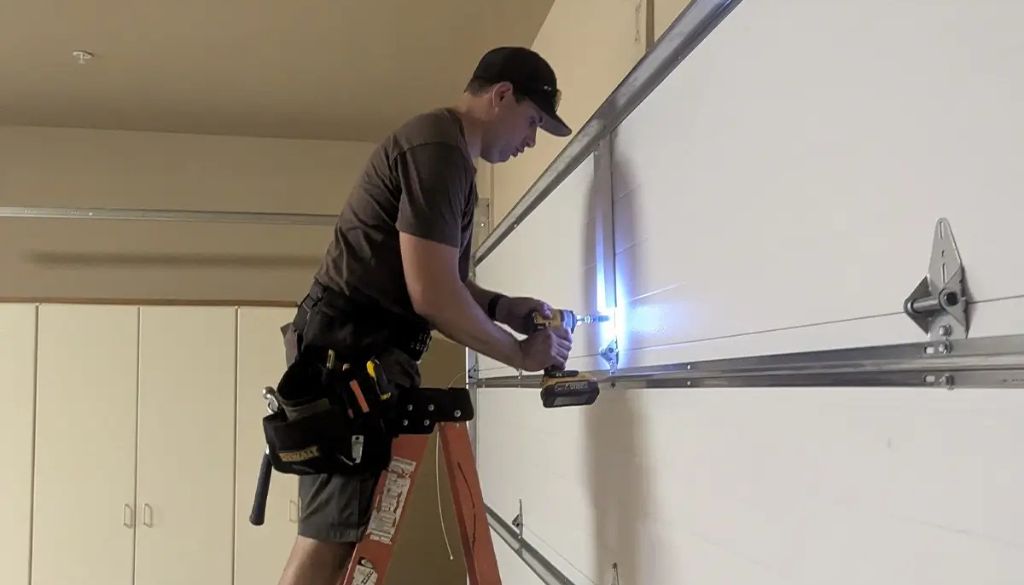
DIY tilt door installation might seem manageable, but the risks outweigh the savings. Incorrect spring tensioning is dangerous, and a door that’s even slightly misaligned will wear prematurely, fail to seal properly, or put excessive load on the motor. Professional installers bring:
*Accurate measurement and space assessment before ordering
*Safe handling and tensioning of counterbalance springs
*Correct motor sizing and programming for your door weight
*Warranty coverage on both parts and labour
*Peace of mind from a rated 4.9/5 team with hundreds of Gold Coast installations completed
Get a Quote for Tilt Door Installation
Ready to get started? Call A1 Garage Doors Gold Coast on (07) 5515 0277 or submit an online enquiry for a free tilt door installation quote. Our team services all Gold Coast suburbs and parts of Brisbane.
View our full service details on our tilt garage door installation page or explore our full range of garage door services. For homeowners looking to upgrade or replace their tilt garage door, choosing reliable garage door repairs in Palm Beach can help ensure your door operates safely, smoothly, and efficiently for years to come.
Frequently Asked Questions
How do tilt garage doors work?
A tilt door pivots outward and upward on a system of pivot arms and a hinge cradle, guided by counterbalance springs that offset the weight of the panel for smooth operation.
How much space is needed for a tilt garage door?
A minimum of approximately 150mm of headroom above the opening and 100mm of side room on each side is typically required, plus clear swing space in front of the garage.
Can tilt doors be automated?
Yes. Retractable tilt doors are fully compatible with automatic openers. Certain canopy tilt doors can also be motorised with the right motor and arm configuration.
What materials are used for tilt garage doors?
Common options include timber, steel, aluminium, and glass or acrylic panels. Aluminium and Colorbond steel are particularly popular on the Gold Coast for their resistance to salt air and coastal conditions.
Are tilt doors suitable for small garages?
Yes — tilt-up canopy doors are well suited to smaller garages or those with restricted headroom and side clearance, as they don’t require a full track system.
