
DIY Garage Door Spring Replacement: Complete Safety Guide
A snapped garage door spring is one of the most common faults we see across Robina, Burleigh Heads, Surfers Paradise, Nerang and Coomera. It usually announces itself with a loud bang from the garage, followed by a door that suddenly feels impossibly heavy or refuses to lift at all. This guide walks you through how to identify the problem, decide whether a DIY repair is sensible, and follow a safe process if you choose to proceed. It also explains, honestly, where the real risks sit — because garage door springs store an enormous amount of energy, and getting it wrong can cause serious injury.
What to Do When a Garage Door Spring Breaks
Common signs of a broken spring
The clearest signal is a loud bang while the door is closing or sitting idle. After that, look for a visible gap in the spring sitting above or beside the door, a garage door that feels far heavier than usual, loose or slack cables, or a door that sits crooked in its tracks. An automatic opener that strains, struggles, then reverses is another strong clue, because the motor is now fighting the full weight of the door without spring assistance.
Immediate safety steps
Stop using the door straight away. A door with a broken spring can fall without warning, so don’t try to force it open with the opener or by hand. Pull the manual release cord to disconnect the opener, keep children and vehicles clear of the doorway, and avoid standing directly underneath a partially raised door. If the door is already stuck halfway, leave it where it is rather than risk it dropping. If you’d rather not touch it at all, an emergency garage door repair is available across the Gold Coast, day or night.
Should you attempt a DIY repair?
Be honest about your skill level. Replacing an extension or roller door spring is within reach for a confident DIYer with the right tools. Replacing a torsion spring is a different matter — these are wound under extreme tension and are responsible for the majority of serious garage door injuries. If you have limited headroom, a double garage door, broken cables or bent tracks, treat it as a professional job. Once the spring is sorted, it’s worth checking whether the motor is also showing signs of wear — our garage roller door motor repair service can diagnose any related issues at the same time.
Understanding Garage Door Spring Types
Identifying your spring type is the first real step, because the replacement process differs completely between them.
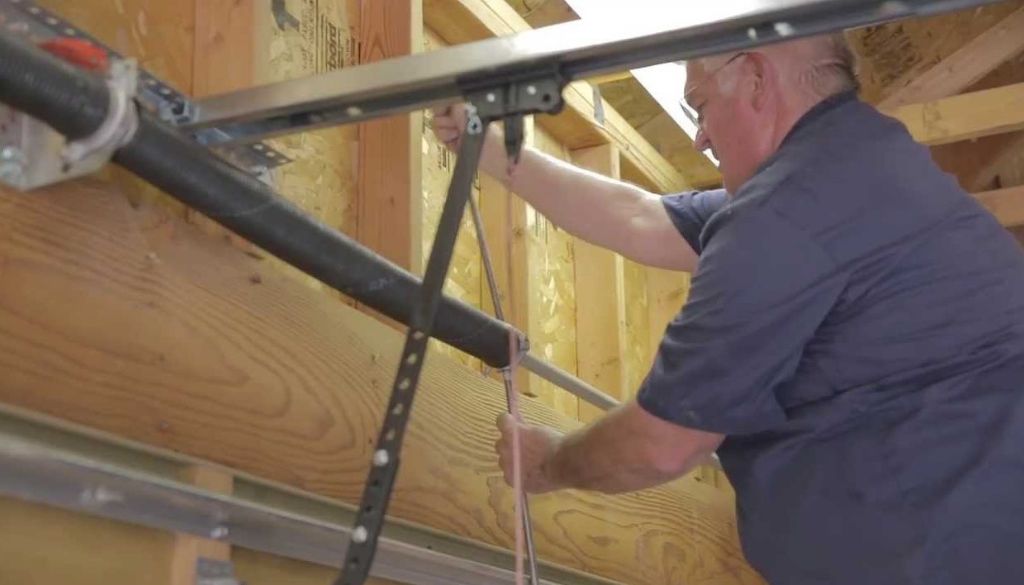
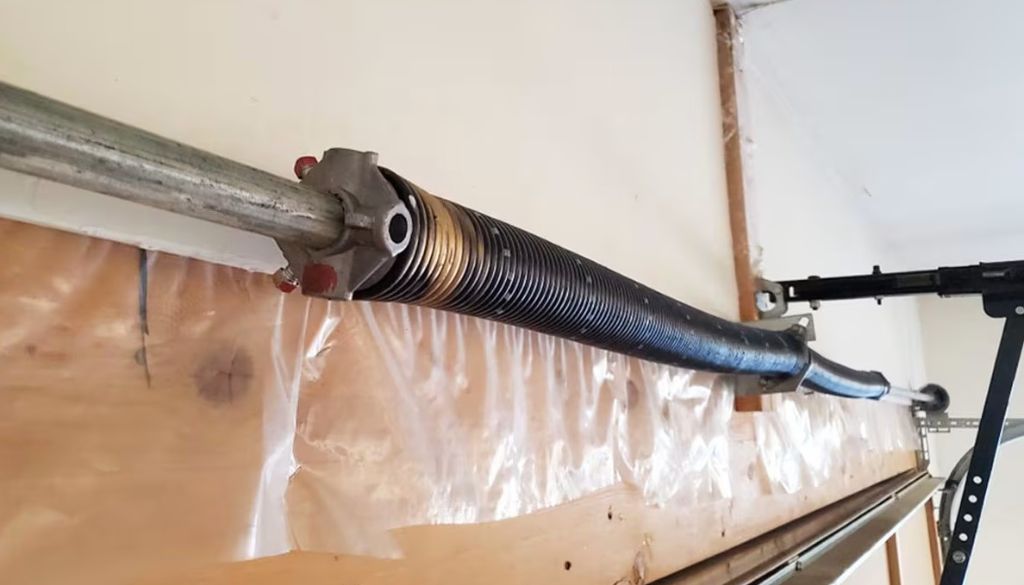
Torsion springs sit horizontally on a metal torsion shaft above the door opening and are common on sectional doors. They use winding cones and cable drums to lift the door and store tension through tightly wound coils. These deliver the smoothest operation but are the most dangerous to service.
Extension springs run along the horizontal tracks on either side of the door and stretch as the door closes. They’re often found on older tilt doors and side-mounted systems. A safety cable threaded through each spring is essential, as it contains the spring if it snaps.
Roller door springs are housed inside the barrel of a roller garage door in an enclosed spring system. Because the spring is sealed within the drum and wound to precise tension, roller door spring work is best left to a technician with the correct winding tools.
Tools and Safety Equipment Required
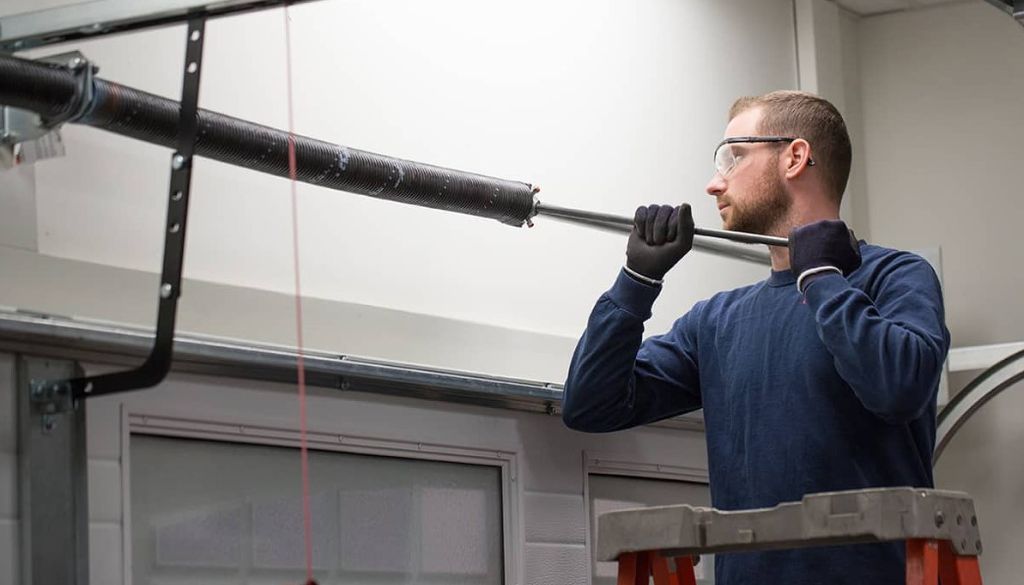
For a torsion spring you’ll need a properly sized pair of winding bars (never a screwdriver or makeshift bar), a ratchet set, spanners, Allen keys, locking pliers and a tape measure. Personal protective equipment is non-negotiable: wear safety glasses, sturdy work gloves and closed shoes, and use a stable ladder on level ground.
The single most important rule is what not to use. Screwdrivers, bolts or improvised winding bars slip under load and are the leading cause of broken fingers, facial injuries and worse. If you don’t own the correct winding bars sized to your winding cone, stop and call a professional.
How to Measure and Choose the Right Spring
Matching the replacement spring exactly is what keeps the door balanced and the opener healthy.
For a torsion spring, you need four numbers: the wire size (measure across 20 coils and divide), the inside diameter of the spring, its overall relaxed length, and the wind direction (left-hand or right-hand). For an extension spring, rec ord the relaxed length, the wire thickness and the hook type at each end. Always note the cycle rating too — a standard spring lasts roughly 10,000 cycles, while a high-cycle spring can reach 20,000 or more, which matters for busy Gold Coast households opening the door several times a day.
Get any of these measurements wrong and the door will be unbalanced, so when in doubt, photograph the old spring and confirm the specifications before ordering. Roller shutter doors have their own spring and barrel mechanism that requires a different approach — see our page on roller shutter garage door repairs on the Gold Coast if that’s the system you’re working with.
Step-by-Step Garage Door Spring Replacement
This is a summary of the torsion process for context — it is not a substitute for hands-on competence.
- Secure the door. With the door fully down, clamp locking pliers onto the track just above a roller on each side so the door can’t lift.
- Release spring tension safely. Insert a winding bar fully into the winding cone, hold it firmly, loosen the set screws, and let the spring unwind a quarter turn at a time, swapping bars as you go. Never remove your grip while there is tension on the bar.
- Remove the old spring. Once fully unwound, loosen the centre bracket and slide the spring off the torsion shaft, noting the cable drum and centre bearing positions.
- Inspect related components. Check the cables, bearings, drums and shaft for wear while everything is apart — replacing a tired cable now saves a second repair later.
- Install the new spring. Slide on the correctly wound spring (left-wind or right-wind), reseat the drums and re-route the cables exactly as before.
- Wind the new spring. Wind in quarter-turn increments to the manufacturer’s specified number of turns, then tighten the set screws onto the shaft.
If any step feels beyond you, a professional garage door repair removes the risk entirely.
Balancing and Testing the Garage Door
With the opener still disconnected, lift the door manually to roughly half-open and let go. A correctly balanced door will stay put. If it drifts down, it needs slightly more tension; if it rises, slightly less. Check that the cables sit evenly on both drums with no slack. Only once the door balances by hand should you reconnect the opener, then test the safety force settings and photo-eye sensors so the door reverses cleanly on contact. A door that still slams or strains the opener is a sign the tension is wrong — and a tell-tale fault covered in our garage door troubleshooting guide.
Garage Door Spring Replacement Costs
DIY costs are mostly parts: a single torsion spring runs roughly $40–$120 AUD, with winding bars adding $30–$60 if you don’t already own them. A professional spring replacement on the Gold Coast typically sits around $200–$450 AUD depending on spring type, whether one or both springs are replaced, and whether cables need attention. Same-day and after-hours call-outs may add a fee. Given the risk and the cost of getting it wrong, many homeowners find professional replacement the better value once tools and time are factored in.
Maintenance Tips to Extend Spring Life
Springs fail faster in our coastal climate, where summer humidity drives rust and winter mornings contract the steel. Spray a light silicone-based lubricant on the springs, rollers and hinges every few months, and inspect for rust, frayed cables and worn drums while you’re there. Running a simple half-open balance test each season catches an unbalanced door before it overworks the opener. A consistent regular maintenance schedule is the cheapest way to push a spring towards the upper end of its cycle life.
When to Call a Professional
Call a technician for any torsion spring on a double door, any job with broken cables or bent tracks, limited headroom, or simply if you’re unsure at any point. The energy stored in these springs doesn’t forgive mistakes, and a worn spring often sits alongside a tiring opener — if yours is also on its way out, our garage door opener comparison is a useful next read.
Need it sorted today? A1 Garage Doors Gold Coast handles spring replacement, cables, openers and full servicing across the Gold Coast. Call (07) 5515 0277 or request a quote — we’re a local, owner-operated team (4.9/5 reviewed) based at 1 Waterford Ct, Bundall QLD 4217.
Frequently Asked Questions
How long do garage door springs last?
Most last 7–12 years, or around 10,000 open-close cycles. Busy households reach that sooner.
Can I open a garage door with a broken spring?
You shouldn’t. The door is dangerously heavy and may fall — disconnect the opener and leave it down.
Should I replace both springs at once?
On a two-spring system, yes. If one has failed, the other is the same age and usually close behind.
Is DIY spring replacement safe?
Extension and roller springs can be DIY-friendly with care; torsion springs carry real injury risk and are best left to a professional.


