
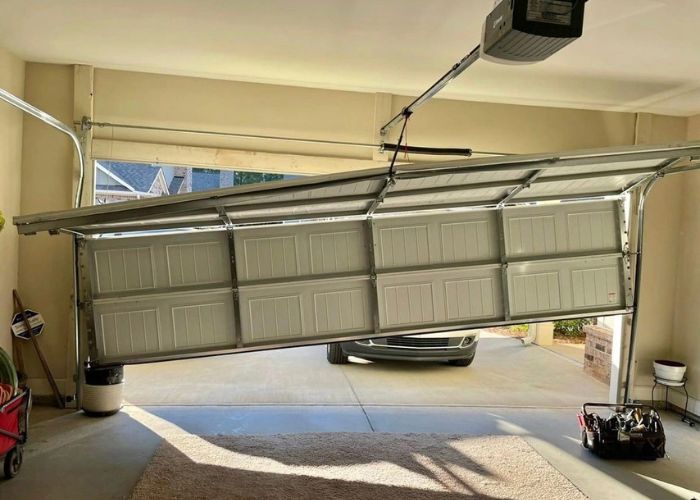
A blocked garage door track is one of the most frustrating problems a Gold Coast homeowner can face — and it tends to happen at the worst possible time. One moment your door is working fine, and the next it’s grinding to a halt, tilting sideways, or refusing to move at all. Whether you’ve noticed a scraping noise during operation, a visible gap between the roller and the track, or a door that simply won’t budge, chances are the track is the culprit.
The good news is that many track blockages are caused by something straightforward — accumulated debris, a loose bracket, or rollers that have worn past their useful life. With the right approach, some of these issues can be resolved with basic tools and a little patience. The key is knowing what you’re looking at, understanding what’s safe to fix yourself, and recognising when the job is better handed to a licensed technician.
Before we look at the step-by-step process, it’s worth understanding what you’re dealing with. Queensland’s coastal climate — salt air, humidity, and the occasional storm — can accelerate the wear and corrosion that contributes to track problems. Whether you’re in Bundall, Broadbeach, or anywhere across the Gold Coast, regular inspection is your best defence against an unexpected breakdown.
Understanding Garage Door Tracks and Rollers
Your garage door travels along a pair of metal tracks — vertical sections mounted on either side of the opening that guide the door upward, and horizontal sections that carry it back along the ceiling. Rollers attached to the door’s edge fit inside these tracks and allow the panels to move smoothly through the full open/close cycle. If clearing the obstruction doesn’t help and the rollers have already jumped their rails, you’ll need to know how to fix a garage door that’s come off track before running the motor again.
When this system is working properly, you won’t notice it at all. When something goes wrong — whether it’s a small stone lodged against a roller, a section of track that’s been bent by an accidental knock, or corrosion that’s built up over time — the door will let you know quickly. The track and roller system is relatively simple in concept, but precision matters: even a few millimetres of misalignment can cause the whole mechanism to bind or fail.
Symptoms of a Blocked or Off-Track Door
Watch for these warning signs that your tracks may be obstructed or out of alignment:
- The door jerks, shudders, or tilts noticeably as it opens or closes
- A grinding, scraping, or squeaking noise during operation
- The door stops partway through a cycle — either fully open or mid-travel
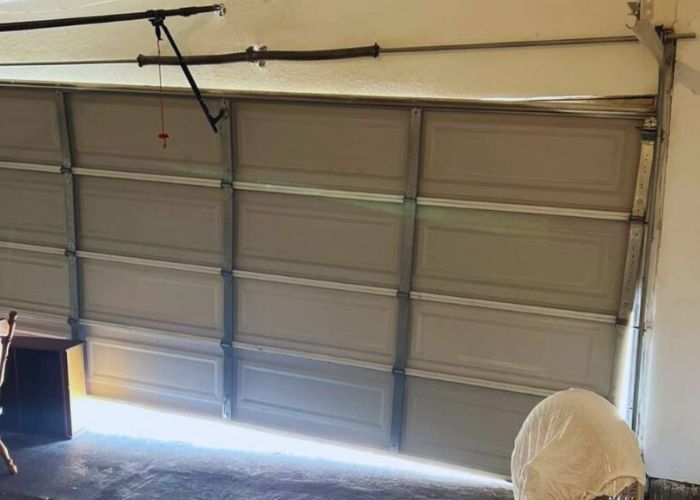
- You can see gaps between the rollers and the track, or visible misalignment between panels
- The opener motor runs but the door barely moves or doesn’t move at all
Any one of these symptoms warrants a closer look before you continue using the door.
Common Causes of Track Blockages
Track problems don’t usually appear overnight. They tend to develop gradually, and Gold Coast conditions can speed up the process.
Debris accumulation is one of the most common causes — leaves, dirt, small stones, and insects all find their way into tracks over time. Queensland summers bring wind, storms, and organic debris that can pack into the track channel and restrict roller movement.
Worn or damaged rollers are another frequent culprit. Nylon and steel rollers both have a finite lifespan. Once they crack, chip, or flatten, they can catch on the track walls rather than rolling smoothly through them.
Bent or warped tracks typically result from impact — a car bumper, a bike handlebar, or simply a heavy knock during moving. Even a minor dent in the track channel can be enough to stop a roller dead.
Loose brackets and hardware allow the track to shift position over time. Vibration from daily operation gradually works bolts loose, and a track that’s moved even slightly out of plumb can cause binding.
Lack of lubrication is the most preventable cause. Without regular application of a silicone-based lubricant, metal components dry out, friction increases, and rollers begin to resist movement rather than glide through it.
Safety Precautions Before You Begin
Garage door repairs involve heavy components under tension. Before picking up a tool, take these precautions seriously:
Disconnect the opener. Pull the emergency release cord (usually a red handle hanging from the drive rail) to disengage the opener, or switch off the circuit breaker. Never attempt track work while the door is connected to a powered opener.
Never work under a partially open door. If the door is stuck in an open position, use locking pliers or c-clamps on the track below the bottom roller to prevent unexpected movement before you begin work.
Wear protective gear. Gloves, safety glasses, and closed-toe shoes should be non-negotiable. Sheet metal edges and under-tension components can cause serious injury.
Work with a partner. Garage door panels are heavy and awkward to manoeuvre alone. Having someone hold the door while you inspect or adjust the track dramatically reduces the risk of an accident.
Avoid DIY spring work. Torsion springs and extension springs are under enormous tension and can cause severe injury if mishandled. If spring components are involved in your blockage, stop and call a professional.
Tools and Materials You’ll Need
| Tool / Material | Purpose |
|---|---|
| Wrench set | Loosening and re-tightening track brackets |
| Screwdrivers (flat & Phillips) | General hardware adjustments |
| Rubber mallet | Gentle track reshaping and alignment |
| Pliers | Minor bracket and cable adjustments |
| Level (spirit or laser) | Checking track plumb and alignment |
| Silicone spray lubricant | Roller and track lubrication |
| Replacement rollers / brackets | If worn components need swapping out |
| Work gloves and safety glasses | Personal protection |
Avoid WD-40 as a lubricant — it’s a degreaser and solvent, not a long-term lubricant. A dedicated silicone-based garage door spray is far more effective and won’t attract dust.
Step-by-Step Guide to Fixing a Blocked Track
Step 1 – Inspect the Tracks and Rollers
With the door in the closed position and the opener disconnected, visually inspect both tracks from top to bottom. Look for:
- Visible debris lodged inside the track channel (use a torch for the upper horizontal sections)
- Dents, bends, or deformations in the track wall
- Rollers that appear cracked, chipped, or sitting unevenly in the track
- Rust or corrosion buildup, particularly at bracket points
Use a dry cloth or stiff-bristle brush to clear any loose debris before attempting any adjustments. If you spot a severely bent track section or cracked rollers, order replacement parts before proceeding.
Step 2 – Loosen the Track Brackets
Using your wrench, slightly loosen — but do not fully remove — the bolts holding the track bracket to the wall or door frame. This gives you enough movement to make small positional adjustments without the track falling away entirely.
Step 3 – Realign the Track
With the brackets loosened, use a rubber mallet to gently tap the track back into its correct position. Place a level against the vertical track section to confirm it’s plumb. For horizontal sections, the track should slope very slightly toward the back of the garage (roughly 1/4 inch over the horizontal run) to assist with gravity closure.
If you have a partner, have them hold the door in place while you work. Once the track looks correct, snug the bracket bolts back down — but don’t fully tighten yet.
Step 4 – Reseat the Rollers
If rollers have come out of the track, this is where your partner becomes essential. Together, carefully lift the door slightly and guide the rollers back into the track channel. Work slowly from the bottom of the door upward, ensuring each roller is properly seated before moving to the next.
Step 5 – Tighten and Check Alignment
Once all rollers are seated, tighten the track bracket bolts to manufacturer specification (firm but not over-torqued). Run a final check with your level. The gap between the roller stem and the track edge should be consistent and even — roughly the thickness of a 10-cent coin.
Step 6 – Lubricate the Tracks and Rollers
Spray silicone lubricant directly onto the rollers, hinges, and the inside of the track channel. Avoid over-application — a light, even coat is more effective than a heavy soak. While you’re at it, lubricate the hinges, bearing plates, and the torsion bar (but not the springs themselves).
For a broader look at maintaining your door and keeping all its components working together, the garage door troubleshooting guide covers the full range of issues that Gold Coast homeowners encounter.
Step 7 – Test the Door Manually
Before reconnecting the opener, test the door by hand. It should lift and lower smoothly with moderate effort — no grinding, no catching, no tilting. If you feel resistance at any point, stop and investigate before continuing.
Step 8 – Reconnect the Opener and Run a Full Cycle
Once the manual test is successful, re-engage the opener by pulling the release cord back toward the door or switching the circuit breaker back on. Run the door through a complete open/close cycle and observe for any unusual movement, noise, or hesitation.
When to Call a Professional
Some track problems are straightforward DIY territory. Others are not. Call A1 Garage Doors Gold Coast on (07) 5515 0277 if you encounter any of the following:
Broken or damaged springs. Torsion springs sit above the door and extension springs run alongside the horizontal tracks. Either type can cause serious injury if they release unexpectedly. This is not a DIY job under any circumstances.
Severely bent or warped tracks. If a track section has been significantly deformed — by a vehicle impact, for example — it will need to be replaced, not reshaped. Attempting to hammer a badly warped track back into position risks making it worse and can throw off the entire door geometry.
Rollers that need replacement. If rollers are cracked, chipped, or have lost their round profile, they should be replaced. While the job itself isn’t dangerous, incorrect roller sizing can cause recurring track problems — a technician can confirm the right replacement for your specific door.
Failed DIY attempt. If you’ve worked through the steps above and the door still isn’t running smoothly, or if the problem recurs within a short period, there’s likely an underlying issue that requires professional diagnosis.
Cable or torsion system issues. Cables that have come off their drums, or any work involving the torsion bar assembly, should always be handled by a licensed technician.
The team at A1 Garage Doors Gold Coast carries a 4.9-star rating across customer reviews and provides residential and commercial garage door repair across the Gold Coast and Brisbane regions. For track repair, emergency call-outs, and full door servicing, contact us at 1 Waterford Ct, Bundall QLD 4217 or call (07) 5515 0277.
Preventive Maintenance Tips
The best track repair is the one you never need to do. A few simple habits will keep your tracks and rollers running reliably year-round on the Gold Coast.
Lubricate every six months. Apply silicone spray to rollers, hinges, tracks, and bearing plates twice a year — or more frequently if your door is in constant daily use. Queensland’s humidity accelerates metal fatigue, so this is particularly important in coastal suburbs.
Clean the tracks quarterly. Wipe out debris from the track channel with a dry cloth every few months. Pay extra attention after storm season when organic material collects in every outdoor crevice.
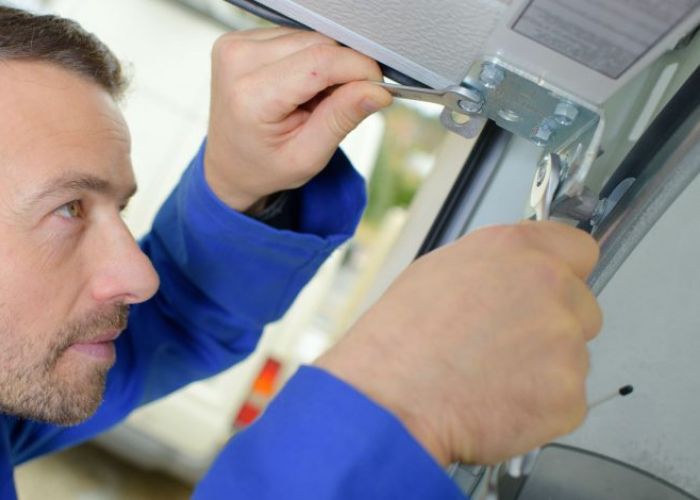
Check bracket bolts annually. The vibration of daily door operation gradually loosens hardware. A once-a-year pass with a wrench to snug up bracket bolts takes five minutes and prevents much larger problems down the track.
Inspect rollers for wear. If rollers are developing flat spots, chips, or visible cracking, replace them before they cause a track blockage. Most rollers have a recommended service life printed on the packaging — nylon rollers typically last 10,000–20,000 cycles.
Keep the area clear. Bikes, bins, tools, and boxes stored close to the door’s path are common culprits for impact damage to tracks and panels. A clear zone of at least 300mm either side of the door’s travel path reduces the risk significantly.
If your garage is part of a larger efficiency upgrade, it’s also worth reading our guide to fixing garage door gaps for energy efficiency and garage door insulation options — both of which affect how well your door seals and performs over time. Homeowners dealing with unusual installation setups should also check garage door installations on a slope, where track geometry considerations are particularly important.
Frequently Asked Questions
What causes a garage door to go off track?
The most common causes are worn or damaged rollers, debris lodged in the track channel, bent track sections from impact damage, loose mounting brackets, or rollers that have been manually forced out of position. In some cases, broken cables or a snapped spring can cause one side of the door to drop, pulling rollers out of alignment.
How do I safely lift a stuck garage door?
Disconnect the opener first using the emergency release cord. With a partner, apply even upward pressure on the door with both hands — one on each side — and lift steadily. Never force a door that’s firmly lodged; if it won’t move with moderate effort, stop and inspect before applying more force. A door under significant spring tension should be handled by a professional if the cause isn’t immediately obvious.
Can I fix a bent track myself?
Minor bends — small dents or slight misalignment — can sometimes be corrected with a rubber mallet and careful bracket adjustment. Significant bends or kinks that have changed the track’s profile will require section replacement. Attempting to hammer a heavily distorted track back into shape risks cracking the metal and compromising the track’s structural integrity.
How often should I lubricate my garage door tracks?
Every six months as a minimum, or every three months if the door is in heavy daily use or located in a salt-air coastal environment. Use a silicone-based lubricant — not WD-40, grease, or oil-based products, which attract dust and can gum up over time.
When is a blocked track an emergency?
If the door is stuck open (leaving your home unsecured), if a spring or cable appears to be broken alongside the track issue, or if the door is partially open and at risk of dropping, treat it as an emergency. A1 Garage Doors Gold Coast provides emergency repair services across the Gold Coast — call (07) 5515 0277 for urgent assistance.
Need Help With Your Garage Door Track on the Gold Coast?
A blocked or off-track garage door doesn’t have to mean a full day of frustration. Many track problems are fixable with basic tools and the steps outlined above — but when the job is beyond DIY territory, or when safety is on the line, A1 Garage Doors Gold Coast is ready to help.
With a 4.9-star reputation, Gold Coast-based technicians, and same-day availability for urgent jobs, we service all residential and commercial garage door types across the region. Whether you need a track realignment, roller replacement, or a full service inspection, give us a call at (07) 5515 0277 or visit us at 1 Waterford Ct, Bundall QLD 4217.
For more general door troubleshooting, head to our complete garage door troubleshooting guide or explore how rollup door problems compare with standard panel door issues.
